



Play-based learning at home: what it is, why it works and how to set up
Play-based learning at home explained: what it is, open-ended play, why it works, links to the EYLF outcomes, and how to set up your home for it by age.
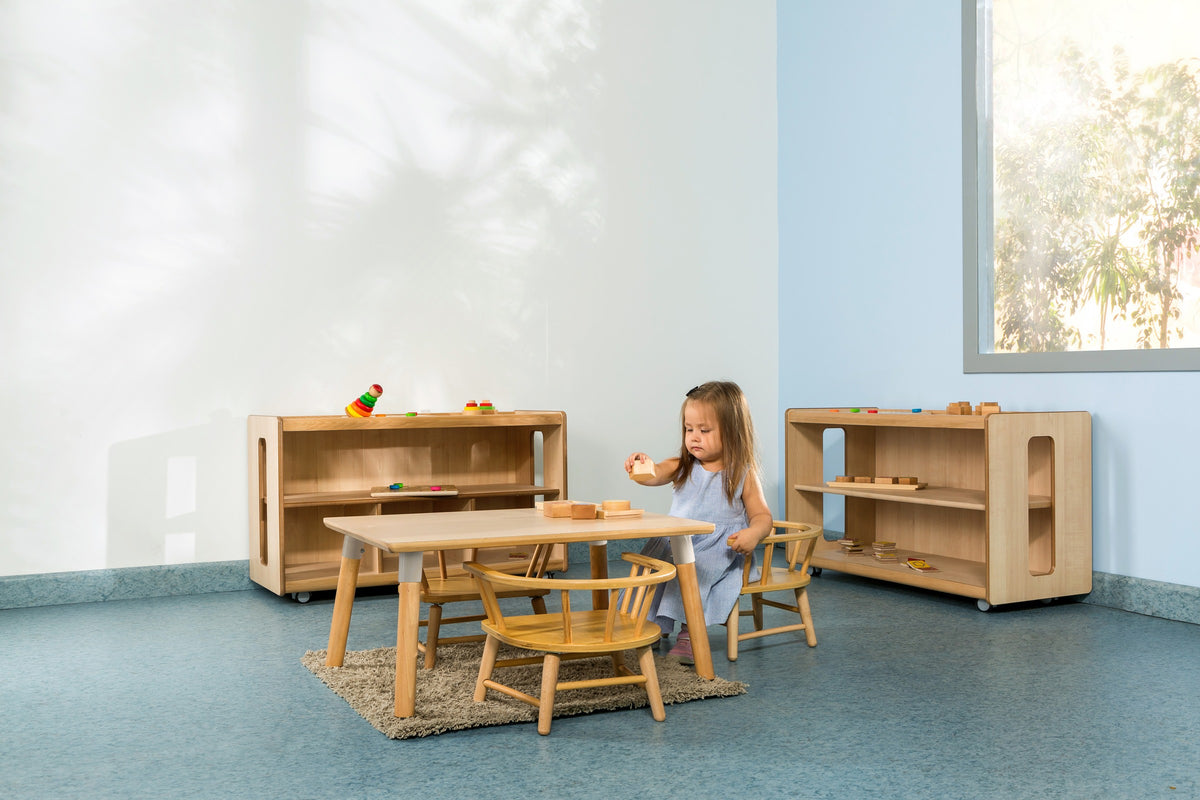
The short answer: Play-based learning means children learn through play they choose and lead, while an adult sets up the space, offers materials and joins in thoughtfully. At home you need little: a child-height table and chair, a low shelf with 6 to 12 open-ended toys, books, art materials and unhurried time. It is the approach at the heart of Australia's early years framework.
Key Points
- In play-based learning the child leads; the adult prepares, observes and extends.
- Open-ended toys, such as blocks, stacking cups and play kitchens, can be used in many ways and grow with your child.
- Play builds language, thinking, early maths, social skills and hand control at the same time.
- A calm, child-height setup does a lot of the work: children use what they can see and reach.
- Your role is to wait, watch, comment and ask open questions, not to direct every step.
What is play-based learning?
Play-based learning is an approach where children learn mainly through play: exploring, building, pretending, testing ideas and solving problems that matter to them. Adults support that play rather than replacing it with lessons.
It helps to think of play as a spectrum:
- Free play: the child chooses what to do and how. The adult is nearby but not leading.
- Guided play: the child leads, but the adult has set up the materials with a purpose, and joins in with comments or questions that stretch the play.
- Adult-led activities: the adult chooses the activity and its goal, such as a short shared book or a cooking task.
Play-based learning at home uses all three, with most of the day spent in free and guided play. In Australia, the Early Years Learning Framework (EYLF V2.0, "Belonging, Being and Becoming", 2022) puts play at the centre of how young children learn in early childhood services. The same ideas work at home. You can read more about the framework on the Australian Government Department of Education website.
What is open-ended play?
Open-ended play is play with no single right answer or end point. The child decides what the materials become.
A puzzle has one solution. A set of wooden blocks can be a tower, a road, a fence for animals, a phone or a birthday cake. Both are useful, but open-ended materials keep children busy for longer and grow with them over years.
| Open-ended (many uses) | Closed-ended (one main use) |
|---|---|
| Wooden blocks and building arches | Jigsaw and knobbed puzzles |
| Stacking cups and cubes | Shape sorters |
| Play kitchen and home corner | Lacing cards with a set pattern |
| Fabric, scarves and cushions | Matching and lotto games |
| Art materials: paper, crayons, paint, playdough | Colour-by-number sheets |
| Small animals and people figures | Toys with one button and one sound |
A good home mix has both. Closed-ended toys build specific skills and the satisfaction of finishing. Open-ended materials build imagination, language and problem solving. Our guide to stacking toys and shape sorters shows how even simple toys can move from closed to open play as children grow.
Why does play-based learning work?
Children learn best when they are interested, active and in charge of what they are doing. Play gives them all three.
- Motivation is built in. Children choose to keep going, so they practise far more than they would if told to.
- Many skills at once. Building a block zoo involves counting, balancing, planning, talking, sharing and hand control in a single game.
- Safe mistakes. A tower falls and is rebuilt. Play lets children try, fail and try again without pressure.
- Language grows. Pretend play is full of talk: negotiating roles, describing, explaining.
- Relationships deepen. Playing alongside a trusted adult builds connection and confidence.
The EYLF describes five learning outcomes for children. Everyday play at home touches every one of them:
| EYLF learning outcome | What it looks like in home play |
|---|---|
| Children have a strong sense of identity | Choosing their own activity, finishing it, showing you proudly |
| Children are connected with and contribute to their world | Playing shop, caring for a doll, helping water the garden |
| Children have a strong sense of wellbeing | Climbing, dancing, calm time with books, tidying their own space |
| Children are confident and involved learners | Testing which blocks balance, sorting, experimenting with water |
| Children are effective communicators | Pretend play conversations, telling a story about a drawing, sharing books |
What does play-based learning look like at each age?
The materials change as children grow, but the principle stays the same: offer interesting things, then follow their lead.
| Age | How they play | What to offer |
|---|---|---|
| 1–2 years | Exploring with hands and mouth, filling and tipping, repeating, simple imitation | Treasure basket of safe objects, stacking cups, posting box, push toy, board books |
| 2–3 years | Building and knocking down, first pretend play, copying adults, lots of "why?" | Blocks, play kitchen, dolls and animals, chunky crayons, playdough, water play |
| 3–4 years | Longer pretend stories, playing with others, sorting and making things | Building arches and larger block sets, role-play props, art trolley materials, simple board games |
| 4–5 years | Planned projects, rules and roles, early letters and numbers in play | Construction with more pieces, dress-ups, letter and number toys, craft, real tools with supervision |
For age-specific toy ideas, see our guides to toys for one year olds, two year olds, three year olds and four year olds.
How do I set up my home for play-based learning?
Create a few small, clear zones at your child's height, with a limited number of materials they can reach and put away themselves. You do not need a dedicated playroom; a corner of the living room is enough.
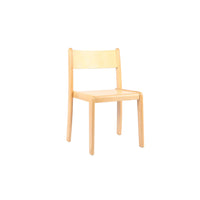
- A child-height table and chair. For drawing, puzzles, playdough and snacks. Feet flat, forearms resting on the table. See our guide to kids table and chair heights by age.
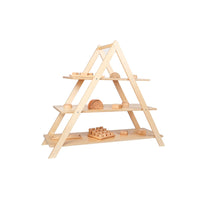
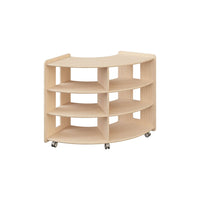
- A low open shelf. Six to twelve activities on display, each in its own spot. The rest stored and rotated. Our guide to Montessori shelves and toy rotation explains how.
- A floor space for building. A rug or mat that defines where blocks and big construction happen, away from foot traffic.
- A book spot. A basket or front-facing shelf of a few books, with a cushion or low seat.
- A pretend play corner. A small kitchen, a few pots and pans, a doll or two, some fabric. Even a cardboard box counts.
- An art spot. Paper, crayons, playdough and a wipeable surface, ready to use without asking.
- Somewhere to move. Inside or out, a space to climb, roll, dance and run.
Keep the space calm. Natural light, a few colours, and toys stored in baskets rather than bright plastic bins make it easier for children to see their choices and settle. If space is tight, our guide to playroom ideas for small spaces shows how to fit these zones into one corner.
What toys support play-based learning?
Simple, sturdy toys that can be used in more than one way, plus real materials from around the house. Quality matters more than quantity.
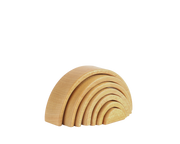
- Blocks and building arches. The most versatile toy you can own. Towers, bridges, roads, enclosures.
- Stacking cups and cubes. Stacking, nesting, pouring sand or water, hiding things.
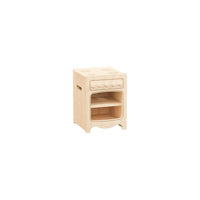
- Role-play furniture. A play kitchen or home corner invites hours of pretend play and real-life talk.
- People and animal figures. They turn blocks into a farm, a zoo or a town.
- Art materials. Paper, crayons, paint, playdough and collage scraps.
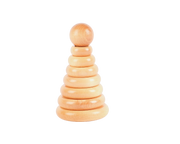
- Loose parts (age-appropriate). Pegs, wooden rings, large shells, fabric squares. For under-3s, keep every item too large to swallow.
- Some skill toys. Puzzles, sorting boxes and threading still have a place. They give the pleasure of finishing.
Our guide to wooden toys explains why many families choose wood for toys that last through several children.
What is the adult's role in play-based learning?
Prepare, watch, then join in lightly. You are the stage manager and the curious friend, not the director.
- Prepare. Set out a few interesting materials. Notice what your child is into and offer more of it.
- Wait and watch. Give your child time to start on their own. A minute of silence often leads to their own idea.
- Describe, don't direct. "You put the big block on the bottom" helps more than "Put the big one on the bottom."
- Ask open questions. "What might happen if…?", "How could we…?", "Tell me about your…"
- Add a challenge. "Can the animals get across the river?" turns a tower into a bridge-building problem.
- Follow, then step back. Join the game on their terms, then let them carry on alone.

Does play-based learning prepare children for school?
Yes. The skills school asks for, such as paying attention, following a sequence, talking about ideas, getting along with others and using hands with control, are the same skills children practise in rich play.
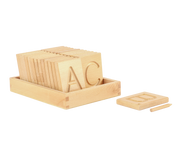
Play leads naturally into early literacy and numeracy too. Children count blocks, sort by colour, "write" shopping lists in pretend play, and recognise the first letter of their name on a tracing board. When interest in letters appears, follow it. Our guide to pre-writing skills and letter tracing explains how to build toward writing without worksheets, and our guide to fine motor activities by age covers the hand skills that come first.
What gets in the way of play at home?
- Too many toys out. Children flit from one to the next. Halve what is on display.
- Not enough time. Deep play needs long, unhurried stretches. Protect some time each day with no outings or screens.
- Too much adult direction. If every game ends in a lesson, children stop inviting you in.
- Fear of mess. Set up for it instead: a mat under the art table, a wipeable surface, a small dustpan your child can use.
- Furniture that does not fit. Children avoid a table they cannot sit at comfortably.
A Simple Place to Start
Clear one corner. Add a child-height table and chair, a low shelf with a handful of open-ended toys, a book basket and some paper and crayons. Then sit nearby and watch what your child does with it.
If you would like help, Chapters brings a solid-wood table and chair at your child's height, with the next size sent as they grow and yours to keep, plus a new box of wooden toys for their age every 3 months with a printed play guide. You can also explore our guides and products for families and our role-play furniture.
Frequently Asked Questions
What is play-based learning in simple terms?
Play-based learning means children learn through play they choose and lead, such as building, pretending, exploring and making. The adult sets up an interesting space, offers suitable materials, watches and joins in to extend the play. Children build language, thinking, early maths, social skills and hand control at the same time, because they are motivated and in charge.
What is an example of play-based learning at home?
A child builds a block road for toy cars. You comment on what they are doing, ask how the cars will cross the "river", and they build a bridge. Along the way they balance, count, plan, talk and solve problems. Other examples include a play kitchen "café", sorting laundry by colour, or water play with jugs and cups.
What is open-ended play?
Open-ended play uses materials that have no single right answer or end point, so the child decides what they become. Blocks, stacking cups, fabric, playdough and play kitchens are open-ended. Puzzles and shape sorters are closed-ended, with one solution. Both are useful, but open-ended materials keep children engaged longer and grow with them for years.
Is play-based learning part of Australia's early years framework?
Australia's Early Years Learning Framework, EYLF V2.0 "Belonging, Being and Becoming" (2022), guides early childhood education and care services and puts play at the centre of how young children learn. It sets out five learning outcomes covering identity, connection with community, wellbeing, confident learning and communication. The same approach works well at home.
How do I set up a play-based learning space at home?
Choose a calm corner and set up a few zones at your child's height: a child-sized table and chair, a low open shelf with 6 to 12 activities, a floor space for building, a book basket, a pretend play corner and an art spot. Store extra toys out of sight and rotate a few every week or two.
What toys are best for play-based learning?
The best toys for play-based learning are simple and open-ended: wooden blocks and building arches, stacking cups, a play kitchen, people and animal figures, art materials and safe loose parts. Add some skill toys such as puzzles and sorting boxes for variety. For children under 3, choose only pieces too large to swallow.
Should I join in my child's play?
Yes, but follow their lead. Wait and watch first, then describe what they are doing, ask open questions and occasionally add a small challenge. Avoid taking over or turning every game into a lesson. Short periods of joining in, then stepping back to let your child carry on, give the best balance of connection and independence.
Does play-based learning help with reading and writing?
Yes. Pretend play builds vocabulary and storytelling, books and songs build sound awareness, and drawing, playdough and threading build the hand control needed for writing. Children often "write" lists or signs in their play. When interest in letters appears, offer tracing boards and letter toys alongside play rather than replacing play with worksheets.
A table, a chair, and a new chapter of play.
Chapters: a solid-wood table and chair at their height, with the next size sent as they grow, and a new box of wooden toys for their age every 3 months.
