



Wooden toys: a parent's guide to choosing, safety and care
Wooden toys explained: the best timbers and safe finishes, safety checks for under-3s, how to clean and care for them, and how many toys a child really needs.
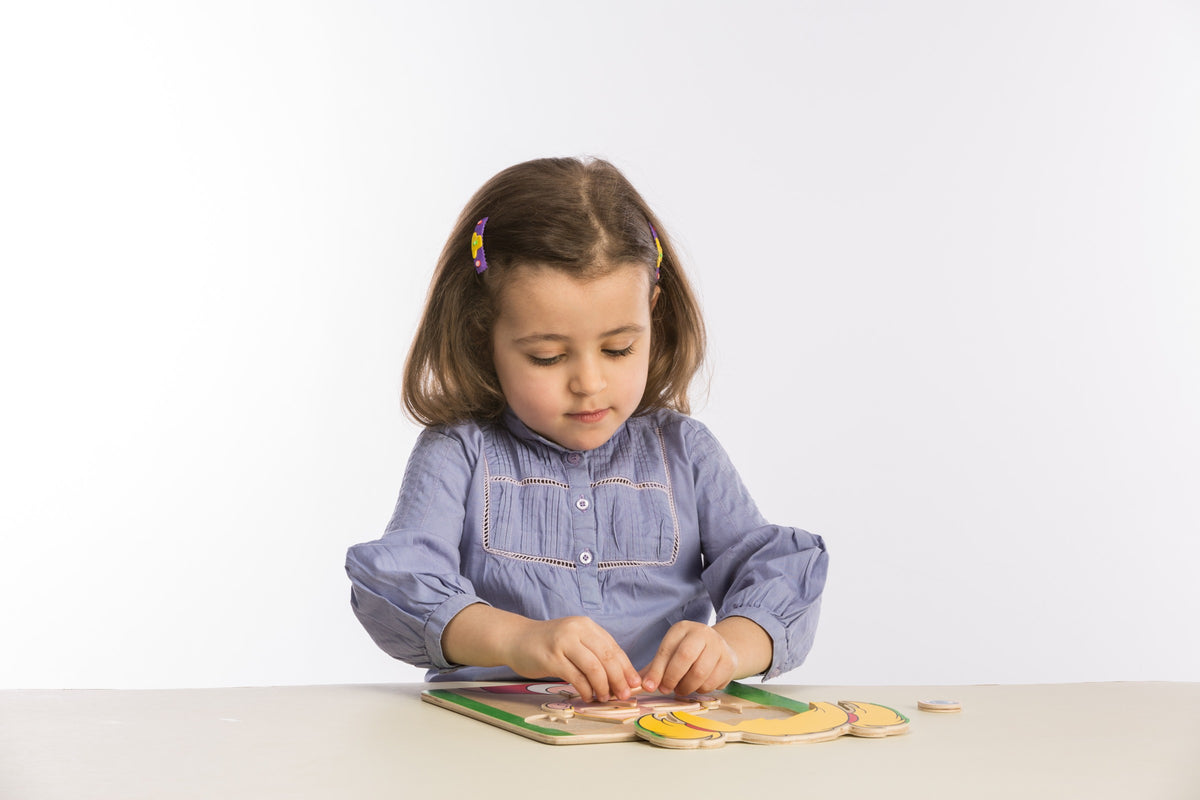
The short answer: The best wooden toys are made from solid hardwood such as beech or maple, sanded smooth and finished with water-based paint, food-safe oil or beeswax. For children under 3, no part should be small enough to swallow. Clean them with a damp cloth and mild soap, never soak them, and keep about 6 to 10 out at a time, rotating the rest.
Key Points
- Solid wooden toys last for years and can be handed down to the next child.
- Hardwoods like beech, maple and birch dent and splinter less than soft pine.
- For under-3s, small parts are the biggest risk, and Australia has a mandatory standard banning them in toys for that age.
- Look for water-based paint, food-safe oil or beeswax, and edges you can run a finger along without catching.
- Wipe clean with mild soap and water: no soaking, no dishwasher, no steriliser.
- A few good toys on rotation hold attention better than a full toy box.
Why choose wooden toys?
Wooden toys are worth choosing because they are durable, pleasant to hold and open-ended. A well-made wooden stacker or set of blocks can survive several children and still look good on the shelf.
Here is what wood does well, from our years of making toys and setting up rooms for children:
- It lasts. Solid timber does not snap like brittle plastic. Dents and scuffs can be sanded back and re-oiled.
- It feels real. Wood has weight, warmth and grain. A child soon learns that a beech block is heavier than a pine one, and that a smooth ring feels different from a ridged one.
- It is quiet. Most wooden toys make a sound only when a child makes one. No batteries and no flashing lights means the child does the work and the thinking.
- It is open-ended. A set of blocks can be a tower, a road, a fence for animals or a pretend phone. Simple toys leave room for imagination, which is the heart of play-based learning at home.
- It can be repaired and passed on. Good wooden toys often outlive the childhood they were bought for.
We cover the learning side in more depth in why choose wooden educational toys. It is written for centres, but every point holds at home.
Are wooden toys better than plastic toys?
Not automatically. A well-made wooden toy usually lasts longer and invites more varied play than a battery toy, but a badly made wooden toy is worse than a good plastic one.
Some honest trade-offs:
- Wood is not automatically safe. Splinters, loose small parts, cracked joints and chipping paint are real problems in cheap wooden toys. The checks further down matter more than the material.
- Plastic suits some jobs better. Bath toys, water play and sandpit toys are easier in plastic or silicone, because wood that stays wet can crack, swell or grow mould.
- Wooden does not mean educational or Montessori. A wooden toy that does everything for the child, or tips twenty tiny pieces onto the floor for a one-year-old, is no better than its plastic cousin. Our Montessori toys by age guide explains what actually makes a toy Montessori-style.
- Wood costs more up front. Because it lasts, the cost over years of use is often lower, but only if the toy suits the child for a good stretch of time.
Our view: choose wood for the toys a child will handle, stack, sort and build with every day, and don't feel guilty about plastic in the bath and the sandpit.
Which wood is best for children's toys?
Hardwoods are best for toys that get chewed, dropped and stacked. Beech, maple, birch and rubberwood are the common choices. Softer timbers like pine are lighter and cheaper but dent and splinter more easily.
| Material | Feel | Good for | Watch for |
|---|---|---|---|
| Beech | Hard, fine even grain, pale | Blocks, stacking rings, puzzles, anything a baby mouths | Very little; it is the classic toy timber |
| Maple | Hard, smooth, very pale | Blocks, rattles, grasping toys | Usually costs more |
| Birch and birch plywood | Medium-hard and stable | Puzzle boards, tracing boards, larger flat pieces | Plywood edges should be sanded and sealed |
| Rubberwood | Medium-hard, light colour | Larger toys, play kitchens, play furniture | Needs a good finish to resist moisture |
| Pine | Soft and light | Larger items for older children | Dents, marks and splinters more readily |
| MDF | Smooth, uniform, heavy | Some puzzle bases and backing boards | Not solid wood; avoid for anything a toddler will chew |

What finishes are safe on wooden toys?
Look for water-based paints and lacquers, food-safe oils, beeswax, or no finish at all. Whatever the finish, it should be smooth, fully cured and not flaking, and for young children it should be tested to a recognised toy safety standard.
| Finish | What it does | Look for | Care |
|---|---|---|---|
| Water-based paint or lacquer | Adds colour and seals the surface | Even coat, no drips, no chips on edges | Wipe only; retire or refinish if it chips on a baby's toy |
| Food-safe plant oil | Soaks in, deepens the grain, natural look | Dry to the touch, no sticky patches | Re-oil when the wood looks pale and dry |
| Beeswax or wax-oil blend | Soft sheen, light protection | Smooth, not greasy | Easy to reapply at home with a soft cloth |
| Unfinished | Raw timber, nothing added | Very smooth sanding | Marks and absorbs grime faster; you can oil it yourself |
Two quick checks at home. Rub a damp white cloth over a painted area: no colour should come off. Then smell the toy: a strong chemical smell suggests the finish has not fully cured, so air it out before play. If anyone in the family has a nut allergy, ask the seller which oil was used, because some traditional wood oils come from nuts.
Reputable makers test paints and finishes to a toy safety standard, such as the AS/NZS ISO 8124 series used in Australia and New Zealand or Europe's EN 71. If a seller cannot tell you which standard a toy meets, that is a reason to keep looking.
How do I check a wooden toy is safe?
Check size, surfaces, joints and strings. For children under 3, the most important check is that no part, and no piece that could break off, is small enough to swallow or choke on.
- Small parts. Australia has a mandatory safety standard for toys for children up to and including 36 months that bans small parts. A rough home guide: if a piece fits inside a toilet roll tube, keep it away from under-3s. Toys labelled 3+ can contain small parts even when they look simple.
- Edges and surfaces. Run your fingertips over every edge, corner and hole. You should feel no splinters, rough end grain or sharp points.
- Joints and fixings. Pull and twist wheels, axles, pegs and knobs. Nothing should loosen.
- Strings and cords. Pull-along toys and lacing sets are for supervised play only. Never leave a toy with a cord in a cot or with a sleeping child.
- Magnets and batteries. Some wooden toys hide magnets (train carriages, fridge letters) or button batteries (musical or light-up parts). Magnets must be fully enclosed, and any battery compartment should need a tool to open.
- Stability. Push-along walkers, rocking toys and play furniture should not tip when a child leans on them.
- Recalls. Product Safety Australia publishes product recalls and safety guidance for parents. It is worth a quick search before buying second-hand.
Which wooden toys suit each age?
Match the toy to what the child is working on right now: grasping and mouthing in the first year, stacking and posting at 1, sorting and pretend play at 2, and finer control, counting and early letters from 3.
| Age | What they are working on | Wooden toys that fit | Safety note |
|---|---|---|---|
| Under 1 | Grasping, mouthing, banging, dropping | Chunky grasping toys, large smooth blocks, simple rattles | Everything goes in the mouth: nothing small, nothing painted that chips |
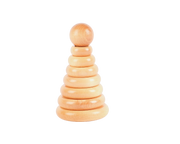
| 1 to 2 | Walking, stacking, posting, filling and tipping | Stacking rings, shape cups, a simple sorting box, chunky knob puzzles, push-along walker | Still no small parts; supervise pull cords |
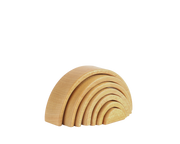
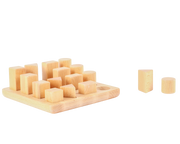
| 2 to 3 | Matching, sorting, pretend play, early building | Stacking cubes, grading towers, building arch, play food and a kitchen, large nut-and-bolt boards | Small-parts rule applies until the third birthday |
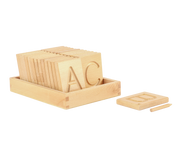
| 3 to 4 | Finer hand control, counting, early letter shapes | Layered body puzzles, counting abacus, lacing, trace-me letter and number boards, block sets | Small parts now allowed, so keep them away from younger siblings |
| 4 to 5 | Planning, early maths, writing readiness | Fraction cups, 1 to 10 stacking rings, trace-me boards, construction sets, simple games | Check for wear on well-loved pieces |
For detailed lists by age, see our guides to toys for one-year-olds, two-year-olds, three-year-olds and four-year-olds. For stacking toys, see our separate guide to stacking toys and shape sorters.
How do you clean wooden toys?
Wipe wooden toys with a soft cloth wrung out in warm water and a drop of mild dishwashing liquid, then dry them straight away. Never soak them, never put them in the dishwasher and never steam sterilise them.
- Wipe. Use a damp, not wet, cloth with a little mild soap. Work along the grain.
- Freshen if needed. For a sticky or grubby toy, a mild mix of white vinegar and water on the cloth works well. Avoid bleach and harsh spray cleaners, which can damage finishes and leave residue a child will mouth.
- Rinse the cloth and wipe again with plain water to lift any soap.
- Dry at once. Pat dry with a towel, then stand the toy up to air dry fully before it goes back on the shelf. Don't dry it in direct hot sun or next to a heater, which can crack the timber.
Toys a baby mouths need a wipe most days. For older children, a weekly wipe, plus a clean after illness in the house, is plenty.
How do you look after and repair wooden toys?
Re-oil or wax unpainted toys when they look dry, sand out small rough spots, and retire any toy that cracks, loses parts or chips paint where a young child mouths it.
- Re-oiling. Every few months, or when the wood looks pale and thirsty, rub in a thin coat of food-safe oil or beeswax with a soft cloth, leave it, then buff off the excess. Let it dry fully before play.
- Raised grain. After washing, the surface can feel slightly furry. A very light rub with fine sandpaper, along the grain, smooths it. Wipe off the dust and re-oil.
- Small splinters and dents. Sand them out the same way. A dent on a hardwood block is cosmetic; a splinter is not, so deal with it before the toy goes back.
- When to retire a toy. Cracks that open up, loose wheels or pegs, paint flaking on a baby's toy, or any piece that has become small enough to swallow. For under-3s, don't glue small parts back on and hope.
How many wooden toys does a child need?
Fewer than most families have. We suggest about 6 to 10 toys out at any one time for a toddler or preschooler, with the rest stored away and rotated every week or two.
With too many toys out, children tip, scatter and move on. With a smaller choice on a low shelf they go deeper, and rotation makes old toys feel new again.
A good small collection for a 2 to 4 year old might hold:
- A set of blocks or stacking cubes (the toy that gets used for longest)
- A stacking or grading toy and a sorting toy
- Two or three puzzles at the right level
- Something for pretend play, such as play food or small figures
- A fine motor toy, such as lacing or a nut-and-bolt board
- Books in a basket, which don't count toward the total
Our guide to setting up a Montessori shelf and toy rotation walks through the rhythm step by step, and playroom ideas for small spaces shows how to fit it all into a corner.
Building a Small Collection That Lasts
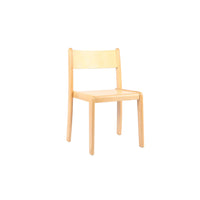
Start with a few well-made basics, add one or two pieces as your child's skills change, and pass on what they have outgrown. That is the whole idea behind Chapters, our membership for families: a new box of wooden toys matched to your child's age every 3 months, with a printed play guide, plus a solid-wood table and chair at their height, with the next size sent as they grow and yours to keep. If you would rather choose piece by piece, browse our natural line toys.
Frequently Asked Questions
Are wooden toys safe for babies?
Well-made wooden toys are safe for babies when they are made from smooth hardwood, have no small or loose parts, and use a finish tested to a toy safety standard. Choose chunky pieces too big to fit in the mouth, check edges for splinters, and retire any toy with chipping paint or cracks. Always supervise play, because babies mouth everything they hold.
What is the best wood for children's toys?
Beech and maple are the best all-round woods for children's toys. They are hard, close-grained and smooth, so they resist dents and splinters even when chewed and dropped. Birch plywood is a good choice for flat puzzle boards, and rubberwood suits larger toys like play kitchens. Pine is softer and marks easily, so it suits older children better.
How do you disinfect wooden toys?
Wipe wooden toys with a cloth dampened in warm water with a little mild soap, or a mild mix of white vinegar and water, then dry them straight away. Do not soak them, put them in the dishwasher or use a steam steriliser, as water and heat crack and warp timber. Avoid bleach and harsh sprays, which damage finishes and leave residue.
Can wooden toys go in the dishwasher?
No. Dishwashers combine heat, water and strong detergent, which swell the wood, loosen glued joints, strip paint and oil finishes and can crack the toy. Wipe wooden toys by hand with a damp cloth and mild soap instead, and dry them immediately. Keep plastic or silicone toys for the bath and water play.
Why are wooden toys more expensive than plastic?
Wooden toys cost more because solid timber, sanding, finishing and hand assembly take more material and labour than moulding plastic. The difference is usually made up over time: a good wooden toy lasts for years, can be repaired and re-oiled, and is often handed down to younger children or friends, so the cost per year of play is often lower.
How many toys should a toddler have out at once?
About 6 to 10 toys out at once works well for most toddlers and preschoolers. Keep them on a low open shelf with space between them, store the rest out of sight, and swap a few every week or two. A smaller choice helps children play longer and more deeply, and rotation makes familiar toys feel new again.
How do I know if a wooden toy has a choking hazard?
For children under 3, any piece that fits inside a toilet roll tube is a rough sign of a choking risk, and Australia's mandatory standard bans small parts in toys for this age. Also check that wheels, pegs and knobs cannot be pulled off, that the wood has no cracks that could break away, and that magnets are fully enclosed.
A table, a chair, and a new chapter of play.
Chapters: a solid-wood table and chair at their height, with the next size sent as they grow, and a new box of wooden toys for their age every 3 months.
