



Fine motor activities by age: ideas for 1 to 5 year olds
Fine motor activities by age for 1 to 5 year olds: what develops when, simple play ideas, everyday jobs that build hand skills, and how table height helps.
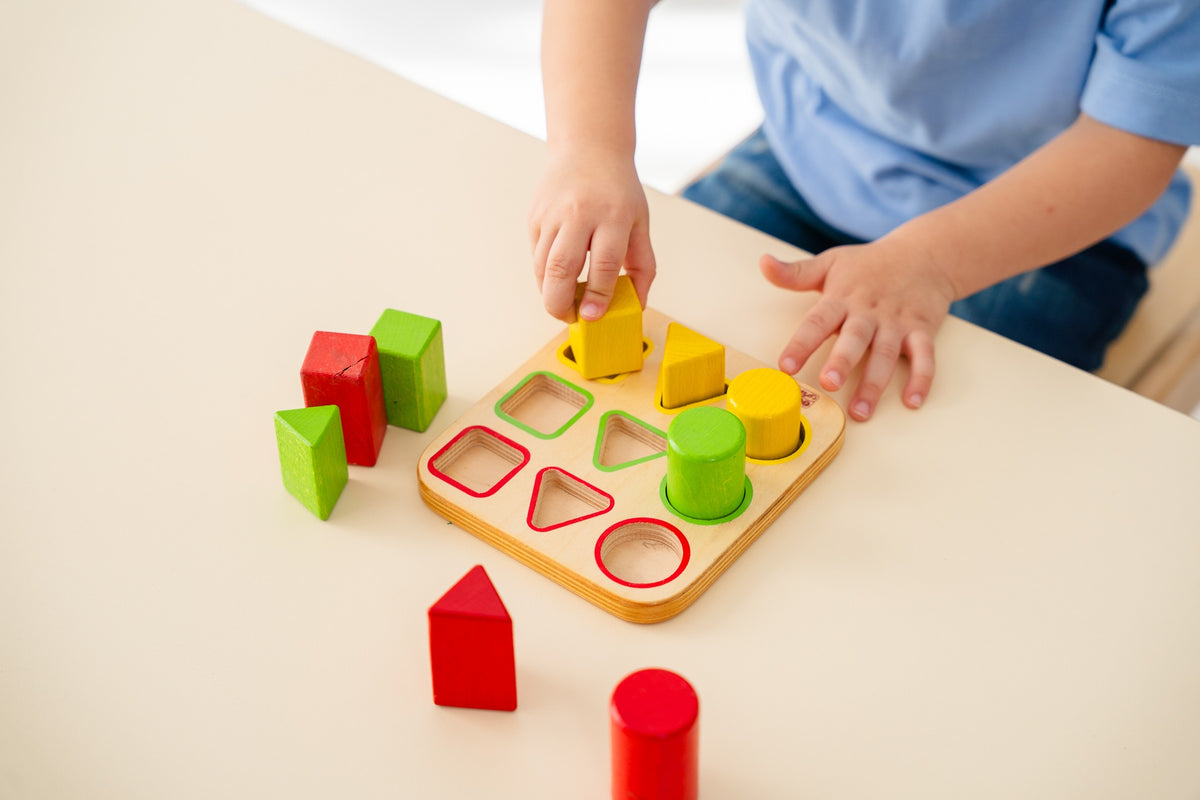
The short answer: Fine motor activities build the small muscles of the hands and fingers. Try posting, stacking and picking up food at 1; threading big beads, twisting lids and knobbed puzzles at 2; playdough, snipping with child scissors and buttons at 3; and drawing shapes, cutting along lines and lacing at 4 to 5. Everyday jobs such as pouring and dressing count too.
Key Points
- Fine motor skills are the small, precise movements of the fingers, hands and wrists, working with the eyes.
- They grow from the body outwards: a stable trunk and shoulder come before skilled fingers.
- Short, frequent practice in play and daily routines beats worksheets.
- Ages are rough guides. Children develop at different rates, and that is normal.
- A table and chair at the right height gives the hands a stable base to work from.
- For children under 3, keep small pieces out of reach unless you are right there supervising.
What are fine motor skills?
Fine motor skills are the small, controlled movements of the fingers, hands and wrists, usually guided by the eyes. They are what children use to pick up a pea, turn a page, do up a button, hold a crayon and, later, write.
They are made up of several smaller abilities:
- Grasp and release: picking things up and letting go on purpose.
- Pincer grasp: picking up small items between the tip of the thumb and index finger.
- Finger isolation: moving one finger on its own, such as pointing or poking.
- Hand strength: squeezing, pinching and pushing with control.
- Wrist rotation: twisting, turning lids and knobs.
- Bilateral coordination: using both hands together, each doing a different job, such as holding paper while cutting.
- Hand-eye coordination: guiding the hand by what the eyes see.
Fine motor skills rest on gross motor skills. A child needs a steady trunk and strong shoulders before their fingers can work precisely. Climbing, crawling, carrying and pushing all help the hands, even though they look like big-body play.
What fine motor skills develop at each age?
Most children follow a similar order, but the timing varies a lot. Use this table as a rough guide to what you might see, not a checklist to pass.
| Age (roughly) | What many children start to do |
|---|---|
| 9–12 months | Pick up small items with thumb and finger; let go of objects on purpose; bang two blocks together; poke with one finger |
| 12–18 months | Stack two or three blocks; drop objects into a container; scribble with a fist grip; turn board-book pages, often several at once |
| 18–24 months | Build small towers; fit simple shapes; turn knobs; feed themselves with a spoon, messily |
| 2–3 years | Turn single pages; unscrew lids; thread large beads; copy a vertical line; snip with child scissors with help |
| 3–4 years | Copy a circle; cut across paper; manage large buttons; build taller towers; hold a crayon with fingers rather than a fist |
| 4–5 years | Copy a cross and then a square; cut along a line; draw a person with several body parts; start writing some letters |
| 5 years and up | Copy a triangle; write their name; cut out simple shapes; use a more mature pencil grip |
What are good fine motor activities for 1 year olds?
At 1, focus on grasping, releasing, poking and posting. Keep objects large, chunky and easy to hold.
- Posting. Drop large wooden discs or balls through a hole in a box lid. Start with a big hole and work down.
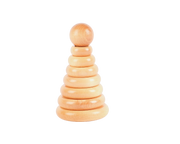
- Stacking and knocking down. Two or three large blocks or a grading tower. Knocking down is part of the learning.
- Filling and tipping. A basket and a few safe objects to fill, tip out and fill again.
- Finger foods. Soft pieces of food picked up one at a time build the pincer grasp naturally.
- Board books. Turning thick pages, lifting flaps.
- Poking and pressing. Pressing fingers into playdough or soft sand, or poking holes in a cardboard box.
- Stacking rings. Large rings on a straight peg. Getting them on matters more than the order.
What are good fine motor activities for 2 year olds?
At 2, children want to twist, fit, thread and copy. Add a little more precision and both-hands work.
- Nut-and-bolt boards. Twisting a large nut onto a bolt builds wrist rotation.
- Threading large beads. Big wooden beads on a stiff lace or a wooden dowel. Holding the lace in one hand and the bead in the other is bilateral coordination.
- Knobbed puzzles. The knob encourages a pinch grip.
- Shape sorters. Turning the shape to fit the hole combines looking and wrist control.
- Opening and closing. Jars with screw lids, containers with snap lids, a purse with a zip.
- Tearing paper. Strips of scrap paper or old magazines, torn and stuck onto contact paper.
- Chunky crayons and big paper. Taped to the table so it doesn't slide.
- Pegs. Large, easy-squeeze pegs on the edge of a box or bucket.
Our guide to stacking toys and shape sorters explains how these build up from 1 to 3.

What are good fine motor activities for 3 year olds?
At 3, children can manage tools, smaller pieces and longer tasks. This is a good age to introduce playdough, scissors and sorting.
- Playdough. Rolling, squashing, pinching, cutting with a blunt knife and pressing in shapes. Few activities build hand strength better.
- Snipping with child scissors. Start with strips of card or playdough snakes, one snip at a time.
- Sorting. Sorting by colour, shape or size, using fingers or child tongs.
- Lacing cards. In and out through holes.
- Buttons and zips. Practise on a dressing frame, a doll's clothes or their own jacket on the table.
- Stickers. Peeling stickers off the sheet is a precise pinch.
- Pouring and spooning. Pouring water between small jugs, spooning dried pasta from bowl to bowl.
- Drawing with short crayons. Short, broken crayons naturally encourage a finger grip rather than a fist.
What are good fine motor activities for 4 and 5 year olds?
At 4 and 5, fine motor play becomes more precise and starts to lead toward writing.
- Cutting along lines. Straight lines first, then curves, then simple shapes.
- Drawing and copying shapes. Circles, crosses, squares, then triangles.
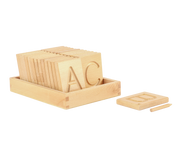
- Tracing. Finger tracing on grooved letter and number boards, then pencil tracing.
- Small construction. Building sets with smaller pieces, pattern blocks, copying a design.
- Threading smaller beads. Making a pattern on a string.
- Clothes pegs and tweezers. Moving pom-poms or small pasta shapes with tweezers.
- Craft. Gluing, folding paper, sticking tape, using a hole punch.
- Kitchen help. Spreading, cracking eggs, kneading dough, peeling a mandarin.
When your child starts to show interest in letters, our guide to pre-writing skills and letter tracing explains the stages from scribble to letters.
Which everyday tasks build fine motor skills?
Daily routines give children dozens of real practice runs every day, without any special toys.
| Task | Skill it builds | Try from about |
|---|---|---|
| Feeding with fingers, then a spoon | Pincer grasp, hand-to-mouth control | 9–12 months |
| Putting toys back in a basket | Grasp and release | 12 months |
| Pulling off socks and hats | Grip, pulling with control | 12–18 months |
| Washing hands, turning taps | Wrist rotation, both hands together | 2 years |
| Pouring water from a small jug | Wrist control, hand-eye coordination | 2 years |
| Unscrewing lids, opening containers | Wrist rotation, hand strength | 2 years |
| Doing up large buttons and zips | Finger strength, both hands together | 3 years |
| Spreading with a blunt knife | Tool use, pressure control | 3 years |
| Hanging washing with pegs | Pinch strength | 3–4 years |
| Folding washing, setting the table | Precision, sequencing | 4 years |
Give children enough time to do these jobs themselves. It is slower at first, but it is some of the best fine motor practice there is.
How does the right table and chair help fine motor skills?
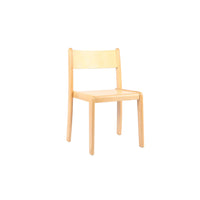
Hands work best from a stable base. When a child sits with feet flat, knees bent to about 90° and forearms resting on the table, the trunk and shoulders are supported and the fingers are free to do fine work.
When the furniture is the wrong size, children compensate. Dangling feet mean they grip the chair or wriggle to stay balanced. A table that is too high lifts the shoulders and tires the arm. A table that is too low makes them slump. All of this takes attention away from the hands.
| Age | Seat height | Table height |
|---|---|---|
| 1–2 years | 17 cm | 36 cm |
| 2–3 years | 21 cm | 40 cm |
| 3–4 years | 26 cm | 46 cm |
| 4–6 years | 31 cm | 53 cm |
Check the fit with your child, as heights vary. Our guide to kids table and chair heights by age walks through the full fit check, and our size guide has every size.

How much fine motor practice does a child need?
There is no set amount. Little and often, built into play and routines, works better than long sit-down sessions.
- Follow interest. A child absorbed in threading for ten minutes is doing more than one who is pushed through a worksheet.
- Stop before frustration. If an activity causes tears every time, it is probably too hard right now. Step back to an easier version.
- Vary it. Squeezing, twisting, pinching, cutting and drawing all build different parts of hand control.
- Keep it available. A few fine motor activities on a low shelf, ready to choose, get used far more than a box in a cupboard. See our guide to setting up a Montessori shelf.
A Weekly Fine Motor Routine
Pick two or three activities from your child's age group above, put them on a tray or a low shelf, and add one everyday job. Swap them as skills grow. If you would like the toys chosen for you, a Chapters membership sends a new box of wooden toys for your child's age every 3 months, many of them fine motor favourites, with a printed play guide. It also includes a solid-wood table and chair at their height, which are yours to keep. You can also browse our educational toys and toys for infants and toddlers.
Frequently Asked Questions
What are examples of fine motor skills?
Examples of fine motor skills include picking up small items between thumb and finger, turning pages, stacking blocks, twisting lids, threading beads, doing up buttons, cutting with scissors, drawing shapes and writing letters. They are the small, precise movements of the fingers, hands and wrists, usually guided by the eyes, that children use in play and everyday tasks.
What fine motor activities are good for a 1 year old?
Good fine motor activities for a 1 year old include posting large discs or balls into a box, stacking two or three big blocks, filling and tipping a basket, turning board-book pages, pressing fingers into playdough and picking up soft finger foods. Keep every object too large to swallow and stay close, because children under 3 put things in their mouths.
What fine motor skills should a 3 year old have?
Many 3 year olds can copy a circle, snip paper with child scissors, thread large beads, build a tower of several blocks, unscrew lids and start to hold a crayon with their fingers rather than a fist. Children develop at different rates, so treat this as a guide. If you are concerned, talk to your GP or child health nurse.
How can I improve my child's fine motor skills at home?
Offer short, frequent hand activities: playdough, threading, posting, puzzles, pegs, tearing paper, pouring water and spooning. Let your child do everyday jobs such as dressing, opening containers and spreading. Make sure they sit at a table and chair at the right height so their hands have a stable base, and keep a few activities on a low shelf.
Is playdough good for fine motor skills?
Yes. Rolling, squashing, pinching, poking and cutting playdough all build hand strength and finger control, which children later need for drawing and writing. It suits a wide age range: toddlers press and poke, while 3 to 5 year olds roll snakes, cut with blunt tools and shape it. Supervise younger children, who may try to eat it.
What is the difference between fine and gross motor skills?
Gross motor skills use the large muscles of the body for movements like crawling, walking, climbing and throwing. Fine motor skills use the small muscles of the fingers, hands and wrists for precise tasks like threading, buttoning and drawing. They are linked: a stable trunk and strong shoulders, built through gross motor play, support skilled hand movements.
When should I worry about my child's fine motor skills?
Children vary widely, so a single skill arriving late is usually not a concern. Talk to your GP or maternal and child health nurse if your child consistently avoids or struggles with hand tasks compared with children their age, seems to have much less strength or control in one hand, or loses skills they used to have. An occupational therapist can assess if needed.
A table, a chair, and a new chapter of play.
Chapters: a solid-wood table and chair at their height, with the next size sent as they grow, and a new box of wooden toys for their age every 3 months.
