




National Quality Standard Quality Area 3: a practical guide to the physical environment
A practical guide to National Quality Standard Quality Area 3: elements 3.1 and 3.2 explained, what assessors look for, and a self-assessment checklist.
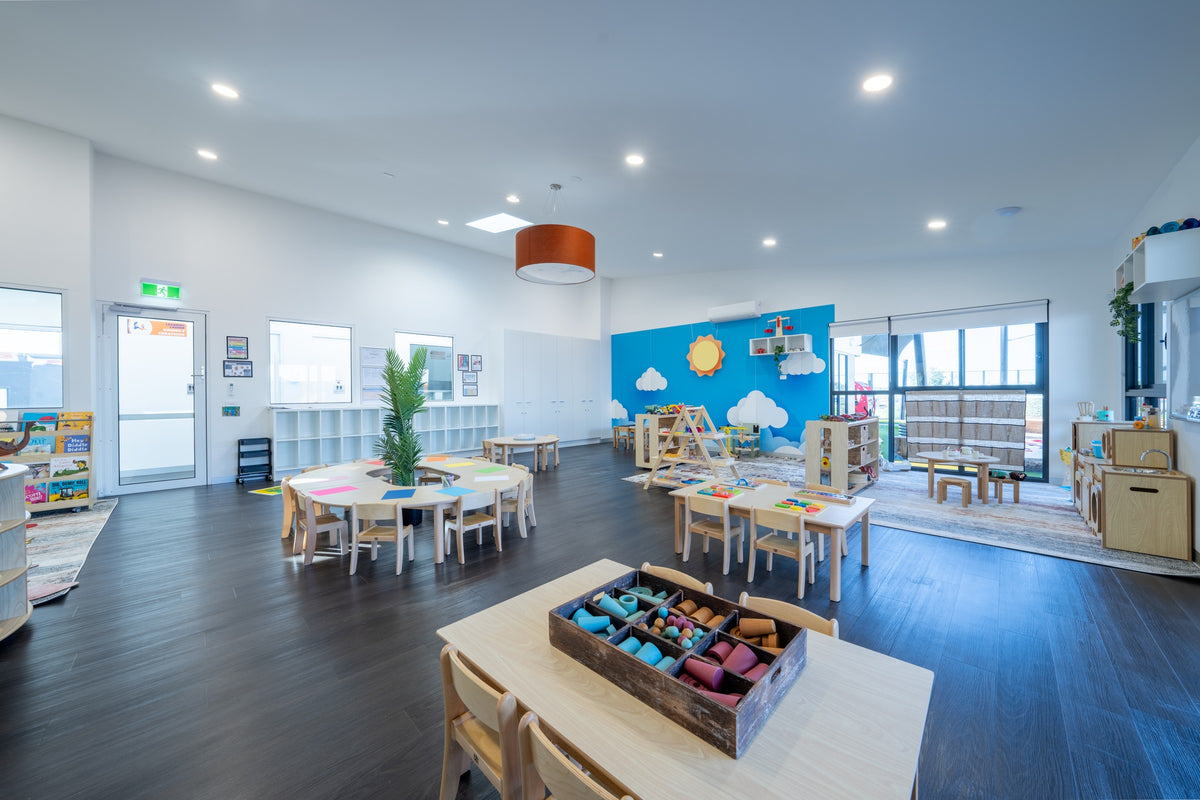
The short answer: Quality Area 3 of the National Quality Standard covers the physical environment. It has two standards and five elements: Standard 3.1 Design (3.1.1 Fit for purpose, 3.1.2 Upkeep) and Standard 3.2 Use (3.2.1 Inclusive environment, 3.2.2 Resources support play-based learning, 3.2.3 Environmentally responsible). To meet it, your premises, furniture and resources must be safe, suitable, well maintained and genuinely used to support children's play and learning.
Key Points
- The NQS has seven quality areas; Quality Area 3 is the physical environment.
- Standard 3.1 is about how the space is designed and kept; Standard 3.2 is about how it is used.
- The National Regulations set the minimums underneath it, including r.103, r.105, r.107, r.108, r.110, r.112 and r.115.
- Assessors look at what children are actually doing in the space, not just how it looks.
- A written maintenance routine and reflection on your environment are strong evidence.
- Use the checklist in this guide for a whole-team self-assessment.
What is the National Quality Standard?
The National Quality Standard (NQS) is the benchmark that education and care services in Australia are assessed and rated against. It is part of the National Quality Framework and is made up of seven quality areas, each with standards and elements underneath.
Services receive a rating for each quality area and an overall rating. The ratings are:
- Excellent
- Exceeding NQS
- Meeting NQS
- Working Towards NQS
- Significant Improvement Required
Quality Area 3 is often the area where small, practical changes make the biggest visible difference. It is also the area where furniture, layout and resources matter most. ACECQA (acecqa.gov.au) publishes the full NQS and its guidance, and it is worth having the official wording open alongside this guide.
What does NQS Quality Area 3 cover?
Quality Area 3 covers the design, upkeep and use of the indoor and outdoor physical environment. It asks whether the space is right for the children who use it and whether it actively supports their learning.
| Standard | Element | In plain terms |
|---|---|---|
| 3.1 Design | 3.1.1 Fit for purpose | Indoor and outdoor spaces, buildings, fixtures and fittings suit the way the service operates and the children who attend. |
| 3.1.2 Upkeep | Premises, furniture and equipment are safe, clean and well maintained. | |
| 3.2 Use | 3.2.1 Inclusive environment | Spaces are organised and adapted so every child can take part, indoors and outdoors. |
| 3.2.2 Resources support play-based learning | There are enough suitable resources, materials and equipment to support play-based learning. | |
| 3.2.3 Environmentally responsible | The service cares for the environment and supports children to become environmentally responsible. |
The "in plain terms" column is our summary, not the official wording. Always check the exact element text in the current NQS from ACECQA.
Which regulations sit under Quality Area 3?
Several Education and Care Services National Regulations set the minimum physical requirements that Quality Area 3 builds on. If a regulation is not met, the related element is unlikely to be met either.
| Regulation | Requirement | Most related element |
|---|---|---|
| r.103 | Premises, furniture and equipment are safe, clean and in good repair | 3.1.2 Upkeep |
| r.105 | Sufficient furniture, materials and developmentally appropriate equipment | 3.2.2 Resources |
| r.107 | At least 3.25 m² of unencumbered indoor space per child | 3.1.1 Fit for purpose |
| r.108 | At least 7 m² of unencumbered outdoor space per child | 3.1.1 Fit for purpose |
| r.110 | Ventilation and natural light | 3.1.1 Fit for purpose |
| r.112 | Nappy change facilities (services educating children who wear nappies) | 3.1.1 Fit for purpose |
| r.115 | Premises designed to facilitate supervision | 3.1.1 Fit for purpose |
What does 3.1.1 Fit for purpose look like in practice?
A fit-for-purpose environment is one where the building, rooms, outdoor space and furniture suit the ages, numbers and needs of the children who use them every day. It is less about how new the building is and more about how well it works.
- Space: each room meets the indoor and outdoor space minimums for the number of children, and the usable space is not crowded out by storage or bulky furniture.
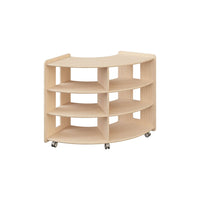
- Supervision: educators can see children across the room and outdoors. Low shelving and dividers create zones without blocking sightlines.
- Light and air: rooms have natural light and ventilation, and curtains or blinds can manage glare and sleep times.
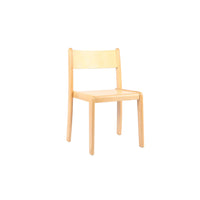
- Furniture that fits: tables and chairs suit the children's sizes. In mixed-age rooms there is more than one size.
- Routines: nappy change, toileting, sleep, meals and handwashing areas are placed so routines run smoothly and children stay in view.
- Flow: walkways are clear, entries are welcoming and children can move between areas, and between indoors and outdoors where possible.
What does 3.1.2 Upkeep mean for furniture and equipment?
Upkeep means the premises, furniture and equipment are kept safe, clean and in good repair, and that you have a reliable system to make sure this keeps happening. Assessors want to see that maintenance is routine, not a one-off tidy before a visit.
| How often | What to check |
|---|---|
| Daily | Outdoor area sweep for hazards; table and high-touch surfaces cleaned; broken toys or pieces removed; floors clear of trip hazards |
| Weekly | Chairs and tables for wobbles, loose joints and splinters; toy cleaning on a roster; soft furnishings checked and washed as needed |
| Monthly | Shelving and storage secure and stable; hinges, castors and handles working; sandpit and outdoor equipment inspected |
| Each term | Full walk-through of every room and outdoor space; repairs and replacements planned and recorded |
- Keep a simple hazard and maintenance register: what was found, who was told, when it was fixed.
- Make it easy for any educator to report a problem, and tag broken items out of use straight away.
- Choose furniture that can be cleaned easily and repaired, with a meaningful warranty. Ours carries a 5-year furniture warranty.
What does 3.2.1 Inclusive environment look like?
An inclusive environment is set up so that every child can participate in play and routines, whatever their age, ability, culture or interests. It is designed with all children in mind, rather than adapted for one child at a time.
- Materials and furniture children can reach, use and put away without adult help.
- Wide enough paths and enough floor space for children who use mobility aids, walkers or wheelchairs.
- Seating options: chairs, floor cushions, soft seating and spots to stand and play.
- Quiet, low-stimulation retreat spaces for children who need a break.
- Books, dolls, images, music and role-play props that reflect the families and cultures in your community, including Aboriginal and Torres Strait Islander cultures.
- Outdoor experiences children of all abilities can join in, not only climbing equipment.
Inclusion is also about indoor and outdoor play being equally rich. If the most interesting materials are only inside, some children miss out.
What does 3.2.2 Resources support play-based learning mean?
This element asks whether you have enough suitable, accessible resources to support play-based learning, and whether they are actually used. Regulation 105 sits behind it: sufficient furniture, materials and developmentally appropriate equipment.
- Enough: children do not wait long for popular materials, and there are enough pieces for several children to play at once.
- Open-ended: blocks, loose parts, art materials and natural objects that can be used in many ways.
- Developmentally appropriate: stacking and grading toys for toddlers; puzzles, counting and letter materials for preschoolers.
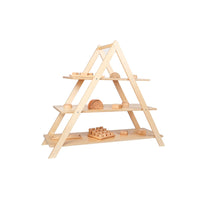
- Accessible: open low shelves and trays, labelled with pictures, so children choose for themselves.
- Linked to the program: resources reflect children's current interests and the learning your team is planning for.
- Rotated: shelves change over time so materials stay interesting without overcrowding.
Quantity matters, but a crowded room with too much out at once can work against play. Fewer, better resources that are rotated often tend to support deeper play than full shelves nobody can find anything on. Our guide to wooden educational toys for centres covers durable, open-ended options.

What does 3.2.3 Environmentally responsible mean?
This element is about the service caring for the environment and helping children learn to do the same. Assessors look for sustainable practices that are part of everyday life, with children involved, not just a recycling bin in the kitchen.
- Gardens, worm farms or composting that children help with.
- Recycling, reusing and reducing waste in art, meals and daily routines.
- Saving water and energy, with children taking part in simple jobs.
- Natural and durable materials, and repairing before replacing.
- Learning about the local environment and Country with families and community.
Furniture and resource choices count here too. Solid, long-lasting pieces that can be repaired and reused across many groups of children are a practical form of environmental responsibility.
What do assessors look for in Quality Area 3?
During an assessment and rating visit, authorised officers gather evidence by watching practice, talking with educators and leaders, and looking at documents. For Quality Area 3, most of the evidence comes from what they can see children doing in the space.
- What they may watch: children choosing and using resources independently; how routines flow; how educators supervise; whether the space is used indoors and out.
- What they may ask: why the room is set up the way it is; how you decide when to change it; how you include every child; how children take part in sustainability.
- What they may look at: maintenance and hazard records, cleaning rosters, your quality improvement planning, and documentation showing how the environment responds to children.
Our guide to preparing the physical environment for assessment and rating goes further on the visit itself.
Quality Area 3 Self-Assessment Checklist
Use this checklist as a team walk-through. Mark each item "yes", "partly" or "not yet", and turn the gaps into actions in your quality improvement planning.
3.1.1 Fit for Purpose
- Every room meets the indoor space minimum for the children booked in.
- Outdoor space meets the minimum and offers shade, active and quiet play.
- Educators can see every zone from their usual positions.
- Tables and chairs fit the children; mixed-age rooms have more than one size.
- Nappy change, sleep, meals and toileting areas support supervision and smooth routines.
- Rooms have natural light and fresh air.
3.1.2 Upkeep
- A maintenance and hazard register is kept and acted on.
- Cleaning rosters cover toys, furniture and soft furnishings.
- No broken, splintered or wobbly furniture is in use.
- Storage and shelving are stable and secured where needed.
3.2.1 Inclusive Environment
- Children can reach, choose and return materials themselves.
- Paths and spaces allow every child to move and take part.
- Families' cultures and languages are visible in the room.
- There is a quiet retreat space in each room.
3.2.2 Resources
- There are enough resources for children to play without long waits.
- Open-ended materials are available every day.
- Resources match the age group and current interests.
- Shelves are rotated and not overcrowded.
3.2.3 Environmentally Responsible
- Children take part in sustainable practices every day.
- Waste, water and energy are managed thoughtfully.
- Furniture and resources are durable and repaired where possible.
Get Help With Your Physical Environment
If your self-assessment shows gaps in furniture, storage or layout, we can help you plan the fix. Send us a floor plan and we will return a quote and a 3D design of your rooms within 24 hours, with furniture sized for each age group. Read more on our NQS Quality Area 3 page or request a quote. For a room-by-room view of what to buy, see our childcare furniture checklist.
Frequently Asked Questions
What is Quality Area 3 of the NQS?
Quality Area 3 of the National Quality Standard is the physical environment. It has two standards: 3.1 Design, with elements 3.1.1 Fit for purpose and 3.1.2 Upkeep, and 3.2 Use, with elements 3.2.1 Inclusive environment, 3.2.2 Resources support play-based learning and 3.2.3 Environmentally responsible. It looks at whether spaces suit children and actively support their learning.
How many quality areas are in the National Quality Standard?
The National Quality Standard has seven quality areas. Each quality area contains standards, and each standard contains elements. Services receive a rating for each quality area and an overall rating: Excellent, Exceeding NQS, Meeting NQS, Working Towards NQS or Significant Improvement Required. Quality Area 3 covers the physical environment, indoors and outdoors.
What is the difference between Standard 3.1 and Standard 3.2?
Standard 3.1 Design is about the space itself: whether buildings, rooms, outdoor areas, fixtures and furniture are fit for purpose and kept safe, clean and in good repair. Standard 3.2 Use is about how that space is used: whether it is inclusive, whether resources support play-based learning, and whether the service is environmentally responsible.
How much space per child is required in childcare?
The Education and Care Services National Regulations require at least 3.25 m² of unencumbered indoor space per child (regulation 107) and at least 7 m² of unencumbered outdoor space per child (regulation 108). Unencumbered means usable space for children's play. Check with your regulatory authority how this is calculated for your premises.
What evidence do assessors look for in Quality Area 3?
Assessors mainly observe how children use the space: whether they can choose resources, move freely, rest and play indoors and outdoors, and whether educators can supervise well. They may talk with educators about why the room is set up as it is, and look at maintenance records, cleaning rosters and quality improvement planning.
Does our furniture need to meet a specific standard for the NQS?
The NQS does not name a furniture standard. Regulation 103 requires furniture and equipment to be safe, clean and in good repair, and regulation 105 requires sufficient, developmentally appropriate equipment. Choosing tables and chairs sized to recognised size marks, such as those in BS EN 1729, makes it easier to show that furniture fits the children.
How can we show environmental responsibility for element 3.2.3?
Show sustainable practices that children are part of every day, such as gardening, composting, recycling in art, saving water and caring for the outdoor area. Document children's involvement and their ideas. Choosing durable, repairable furniture and natural resources, and repairing before replacing, also demonstrates environmentally responsible decisions about the physical environment.
How often should we review our physical environment?
Review it continually through daily checks and observation, and do a full team walk-through at least each term. Record hazards and repairs in a register, and use what you notice about children's play to adjust zones and resources. Link the changes and your reasons to your quality improvement planning so the reflection is visible.
Planning a room, or a whole centre?
Send us your floor plan. Within 24 hours you'll have an itemised quote, 2D room plans, a 3D showcase and a video walkthrough of your centre.
