




Repair, refurbish or replace? How to make childcare furniture last
When childcare furniture can be repaired or refurbished, when it has to be replaced, a simple safety check routine, and how repairs and replacement parts work with Edu Fun.
The short answer: Most wear on good childcare furniture can be fixed. Loose joints, worn glides, a tired finish and a damaged part are repair jobs, and solid timber can be sanded back and refinished. Replace a piece when its frame is cracked, it stays unstable after repair, it is the wrong size for the children using it, or parts are no longer available. Whatever you decide, anything unsafe comes out of use straight away.
Key Points
- The National Regulations require furniture to be safe, clean and in good repair (regulation 103), so repairs are part of compliance, not a nice-to-have.
- A short weekly check and a closer check each term catch most problems early.
- Loose joints, worn glides and feet, tired finishes and broken hardware are usually repairable.
- Cracked frames, swollen or delaminated board and furniture that no longer fits the children usually mean replacement.
- Solid timber can be refinished. Most cheap board and moulded plastic can't.
- Edu Fun keeps replacement parts at our Pakenham warehouse, and centres refurbishing a room or a whole centre with us get the same 25% discount as our fit-outs.
Why repair childcare furniture instead of replacing it?
Three reasons: cost, time and waste. A replacement glide or leg costs a fraction of a new chair. A repair can often be done quickly, without waiting for new stock. And furniture that stays in use stays out of landfill. Good furniture is designed for this: built from materials that can be refinished, with parts that can be swapped rather than the whole piece thrown away.
There is also a compliance reason. Regulation 103 of the Education and Care Services National Regulations requires premises, furniture and equipment to be safe, clean and in good repair. A wobbly chair that stays in a room is a hazard and a finding waiting to happen. See our guide to preparing your physical environment for assessment and rating.
How do you check childcare furniture for safety?
Make it a routine. A quick weekly look, a closer check once a term, and a record of what you found and fixed.
Every week, as you set up the room:
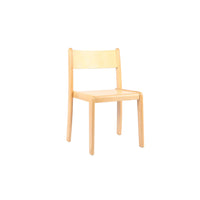
- Rock each chair and table. Anything that wobbles comes out of use until it is fixed.
- Look for splinters, cracks, sharp edges, lifting finishes and missing glides or feet.
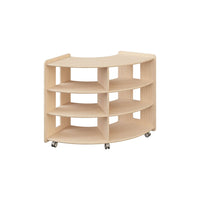
- Check that doors, hinges and castors on shelving and trolleys work and lock.
Once a term:
- Turn chairs and tables over and check every joint and fixing.
- Check that tall units are still anchored to the wall.
- Check that each room still has the right sizes for the children in it. Groups change over the year. Our size chart and fit check shows what to look for.
- Note what needs repairing, what needs refinishing and what needs replacing, and plan it before it becomes urgent.
What childcare furniture can be repaired?
| Problem | Usually | What to do |
|---|---|---|
| Loose or wobbly joint | Repair | Take it out of use. Tighten the fixings or have the joint reglued properly. |
| Worn or missing glides and feet | Repair | Replace them. Worn glides scratch floors and make chairs unstable. |
| Scratched, stained or worn finish on solid timber | Refurbish | Sand back and refinish. Solid timber can be refinished more than once. |
| Broken hinge, catch or castor | Repair | Replace the hardware with the right part. |
| Damaged leg, rail or tabletop | Repair, if the part is available | Replace the part rather than the whole piece. |
| Cracked frame or seat | Replace | Take it out of use straight away. Structural cracks can't be trusted after a patch. |
| Swollen or delaminated board from water | Replace | Board that has swollen loses its strength and won't go back. |
| Wrong size for the children | Move or replace | Move it to a room it fits, or replace it with the right size mark. |
What does refurbishing childcare furniture involve?
Refurbishing brings a sound piece back to near-new condition. For solid timber that usually means cleaning, tightening or regluing joints, replacing glides and worn parts, then sanding back and refinishing the surfaces. The result looks fresh and is easier to keep clean, because a sealed surface doesn't hold grime the way a worn one does.
It only works on furniture worth refurbishing. Solid hardwood like beech has the depth to be sanded back. Thin veneers, cheap board and moulded plastic usually don't: once the surface is worn through or cracked, there's nothing left to restore. That is one reason the material matters when you buy. Our guide to wooden or plastic childcare furniture compares them.
When should childcare furniture be replaced?
- The frame or seat is cracked or split.
- It is still unstable after the joints have been repaired.
- Board has swollen, split or delaminated.
- There are sharp edges or splinters that refinishing can't remove.
- It doesn't fit the children who use it, and there is no room it would fit.
- Parts are no longer available, or the repair costs more than a replacement.
How Repairs Work With Edu Fun
Our furniture is designed to be repaired, and we look after it here in Australia.
- A 5-year warranty. Our furniture is covered against manufacturing faults for 5 years from delivery. If a claim is approved, we repair or replace the item or part, or refund you, and cover the delivery costs. Normal wear and tear isn't covered. See the warranty.
- Replacement parts in Pakenham. Our Pakenham warehouse keeps replacement parts for our furniture. Where we can, we replace a part rather than the whole item.
- Parts after the warranty. Wear and tear or an accident: send us photos and we'll tell you which part you need and what it costs.
- Refurbishing a room or a whole centre? When rooms are tired or your groups have changed, send us your floor plan and we'll plan the refresh with you. Refurbishments get the same 25% discount as our fit-outs. Get a quote.
- Care that protects the warranty. Our care and cleaning guide covers the everyday cleaning that keeps finishes in good shape.
To start, email sales@edu-fun.com.au with photos, the product name or your order number, and what's wrong, or call (03) 5918 2576.
Frequently Asked Questions
Do childcare centres have to keep furniture in good repair?
Yes. Regulation 103 of the Education and Care Services National Regulations requires premises, furniture and equipment to be safe, clean and in good repair. A simple check routine, with a record of what was found and fixed, is the easiest way to show it.
Can wooden childcare chairs be refinished?
Solid timber chairs can usually be sanded back and refinished, often more than once, as long as the frame is sound. Veneered and board furniture has much less to work with, and moulded plastic can't be refinished.
What should I do with a broken chair?
Take it out of the room straight away so no child uses it. Then decide whether it is a repair, such as a loose joint or a missing glide, or a replacement, such as a cracked frame. If it's under warranty, photograph the damage and contact the supplier.
Can I get replacement parts after the warranty?
Yes. Send us photos and the product name or your order number, and we'll tell you which part you need and what it costs. If you're refurbishing a whole room or centre with us, you get the same 25% discount as our fit-outs.
How often should childcare furniture be checked?
A quick check every week, such as rocking chairs and tables and looking for splinters and missing glides, and a closer check of every joint, fixing and wall anchor once a term.
Planning a room, or a whole centre?
Send us your floor plan. Within 24 hours you'll have an itemised quote, 2D room plans, a 3D showcase and a video walkthrough of your centre.
