




Wooden or plastic childcare furniture: which is better for your centre?
Solid timber, board or moulded plastic: how childcare furniture materials compare on durability, safety, cleaning, repair and cost over its life, and which to choose for each part of your centre.
The short answer: For tables, chairs and shelving that children use every day indoors, solid timber usually wins over its life: it is stable, strong, can be repaired and refinished, and suits the natural, calm rooms most early learning programs aim for. Moulded plastic is cheaper, light and easy to wipe, which makes it useful for some jobs, but it can't be refinished and is usually replaced rather than repaired. Board furniture sits in between, and quality varies a lot.
Key Points
- Compare cost over the furniture's life, not the price on the day: what it costs, divided by the years it stays safe and in use.
- Solid hardwood such as beech is strong, stable and can be sanded back and refinished more than once.
- Plastic is light, cheap and wipeable, but cracks and sun damage usually mean replacement.
- Board quality varies: good plywood is strong, while cheap particleboard chips at the edges and swells if it gets wet.
- Whatever the material, check the size marks, the stability, the edges and the warranty.
- Indoor furniture belongs indoors. Use furniture made for outdoors in outdoor areas.
How do wooden and plastic childcare furniture compare?
| Solid timber | Board (plywood, MDF, particleboard) | Moulded plastic | |
|---|---|---|---|
| Strength and stability | High. Heavier, so chairs and tables stay put. | Good plywood is strong. Cheap board is weaker at joints and edges. | Light and easy to move, which also means easy to push over or slide. |
| Everyday wear | Scratches and dents, which can be sanded out. | Edges chip and laminates can lift. Water makes particleboard swell. | Scuffs, fading in sunlight, cracks under stress. |
| Cleaning | Easy when the finish is sealed and kept in good condition. | Easy on laminate. Exposed edges absorb moisture. | Easy to wipe down. |
| Repair | Joints can be tightened, parts replaced, surfaces refinished. | Hardware and parts can be replaced. Damaged board usually can't be restored. | Usually replaced rather than repaired. |
| Look and feel | Warm, natural and calm. | Depends on the finish. | Often bright, and can dominate a room. |
| Price on the day | Highest. | Middle. | Lowest. |
Is wooden furniture better for children?
For everyday indoor furniture, it usually is, for practical reasons more than fashion. A heavier, solid chair is less likely to tip or slide when a child pushes back from the table. A stable table gives children a steady surface for drawing, puzzles and meals. And natural materials fit the environments the Early Years Learning Framework and the National Quality Standard encourage: calm, uncluttered rooms where the materials children use, not the furniture, are the focus. Our guide to the EYLF learning environment goes room by room.
That said, a well-made plastic chair in the right size is better than a badly made wooden one in the wrong size. Size and stability come first. Check that chairs and tables match the ages in each room using the size chart and fit check.
Is plastic childcare furniture more hygienic?
Not by itself. Plastic is easy to wipe, but so is sealed timber. What makes furniture hygienic is a sound, sealed surface and a cleaning routine that suits it. Worn finishes, cracks and chipped edges are what hold dirt, on any material. Keep finishes in good condition, follow the maker's cleaning advice and avoid harsh products that strip the finish. Our care and cleaning guide covers everyday cleaning for our furniture.
Which is cheaper over the life of the furniture?
Work out the cost per year: the price, plus any repairs, divided by the number of years it stays safe and in use. A cheaper piece that has to be replaced sooner can cost more per year than a dearer piece that lasts, is repaired, and can move to another room as groups change. Solid timber also keeps its usefulness when it gets tired: it can be refurbished rather than replaced.
Factor in the warranty too. A long warranty from a supplier who keeps parts locally is worth more than a long warranty you can't easily claim on.
Which material for which part of the centre?
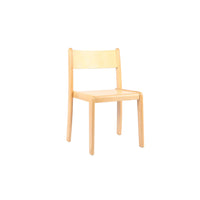
- Tables and chairs: solid timber, in the right size mark for each room. They get the hardest daily use.
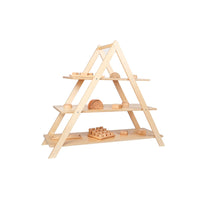
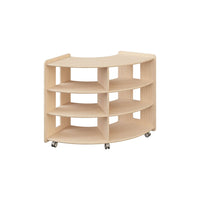
- Open shelving and room dividers: solid timber or good plywood, low and stable, anchored where needed.
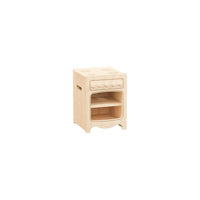
- Home corner, art trolley and zone furniture: timber or plywood, with smooth, rounded edges.
- Staff storage: good board is often fine where children don't use it directly.
- Outdoors: furniture made for outdoor use. Indoor furniture left outside, or exposed to standing water, wears quickly and usually isn't covered by warranty.
What Edu Fun Furniture Is Made From
Our chairs, tables and learning resources are made from solid European beech from responsibly managed forests, kiln-dried for stability. Chairs and tables are made to BS EN 1729, the European standard for educational furniture, and tested for strength, stability and durability by FIRA International. Everything is covered by a 5-year warranty against manufacturing faults, and our Pakenham warehouse keeps replacement parts. See our quality policy and environment policy, or visit the showroom to see and sit on it.
Frequently Asked Questions
Is wood or plastic better for childcare chairs?
For everyday indoor use, solid timber chairs are usually the better choice: they are heavier and more stable, last longer and can be repaired and refinished. Plastic chairs are cheaper and lighter and easy to wipe, but they usually can't be repaired once they crack. Whatever the material, choose the right size mark for the children's ages.
What is the most durable material for childcare furniture?
Solid hardwood, such as beech, and good-quality plywood are the most durable for everyday childcare use. They handle knocks and cleaning, and solid timber can be refinished when it wears.
Can wooden childcare furniture be cleaned properly?
Yes. Sealed timber wipes clean like any other hard surface. Keep the finish in good condition, use the cleaning products the maker recommends, and refinish worn surfaces rather than letting them absorb moisture and grime.
Is particleboard furniture safe for childcare?
It can be safe when it is well made, but it is less durable. Edges chip, screws loosen in it over time, and it swells and weakens if it gets wet. It is better suited to storage that children don't use directly than to chairs and tables.
Planning a room, or a whole centre?
Send us your floor plan. Within 24 hours you'll have an itemised quote, 2D room plans, a 3D showcase and a video walkthrough of your centre.
