




Reading corner ideas for early learning rooms: layout, furniture, books and upkeep
Reading corner ideas for early learning rooms: where to put it, face-out book displays, soft seating, books by age, inclusive choices and a setup checklist.
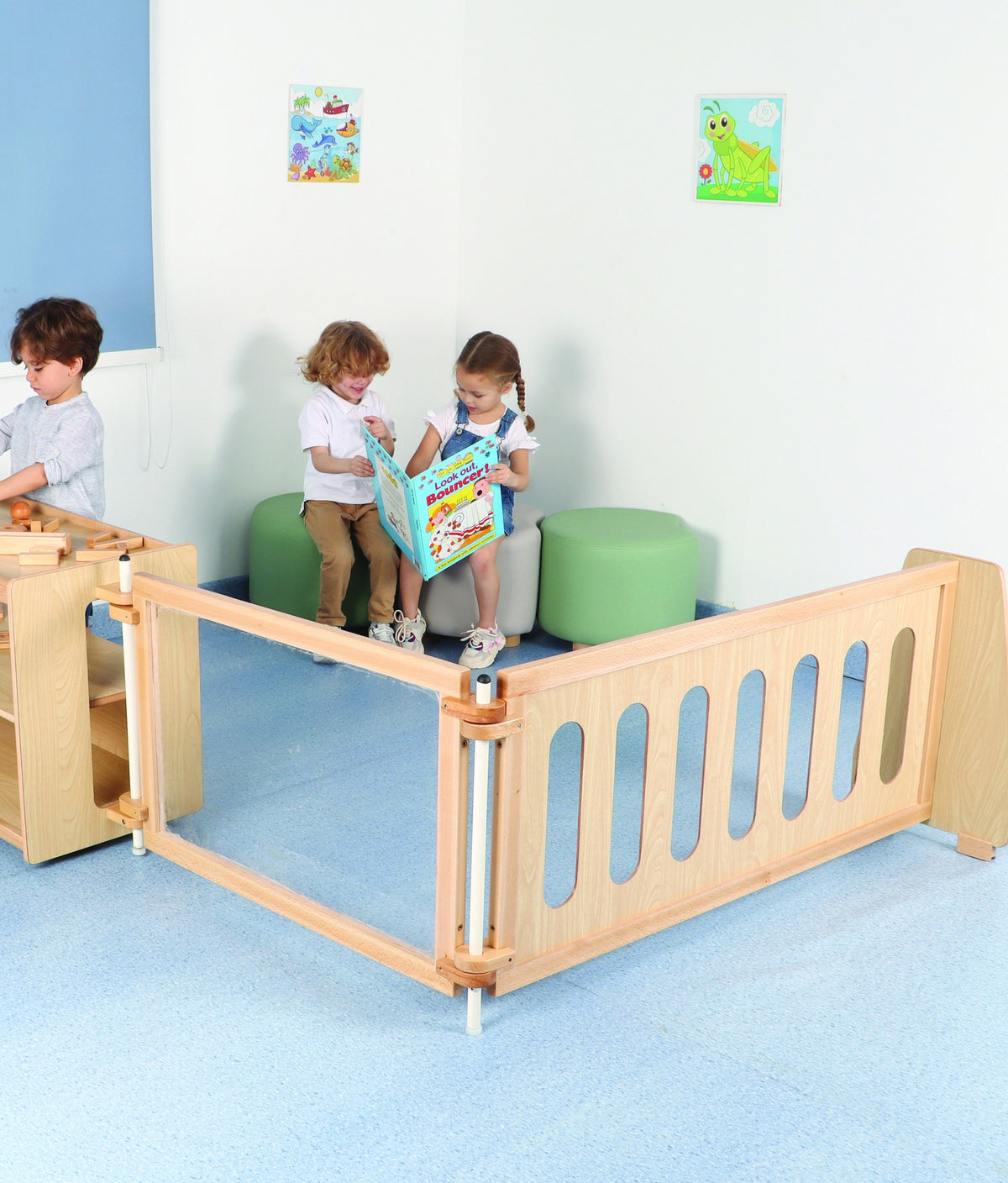
The short answer: A good reading corner is a calm, cosy space on the quiet side of the room, near natural light, with books displayed face-out at child height, soft seating for a few children and an adult, and a rug. Keep a small selection of books that reflect children's interests, cultures and languages, rotate them often, and keep dividers low so educators can supervise.
Key Points
- Put the reading corner on the quiet side of the room, away from blocks and the home corner.
- Display books face-out at child height. Children choose books by their covers.
- Provide soft seating that fits a small group and an educator, plus a rug and cushions.
- Fewer books, rotated often, beat crowded shelves. Keep favourites out and store the others.
- Include books that show the children's own families, cultures, abilities and home languages.
- Repair or remove damaged books and clean soft furnishings on a regular cycle.
Why does an early learning room need a reading corner?
A reading corner gives children a quiet, inviting place to look at books, share stories and rest from busy play. It supports early literacy, language and wellbeing at the same time, and it shows children that books are valued in their room.
Under EYLF V2.0, a reading corner supports children to become effective communicators, one of the five learning outcomes. It also supports wellbeing: a soft, calm space where a child can retreat with a book or a friend helps them regulate during a long day. The Australian Government Department of Education (education.gov.au) publishes the framework.
A good reading corner is used for:
- Children browsing and "reading" books on their own, including retelling familiar stories from the pictures.
- Educators reading with one child or a small group.
- Retelling stories with puppets and story props.
- Listening to stories in home languages, read by educators or family members.
- A quiet break when a child needs time away from the group.
Where should the reading corner go in the room?
Place the reading corner in a quiet part of the room, near a window for natural light, away from the home corner, blocks and wet areas. Enclose it on two or three sides with walls or low shelving so it feels sheltered, but keep it open to view.
- Quiet zone. Group the reading corner with other calm areas such as puzzles, writing or a rest space.
- Natural light. Regulation 110 requires services to be well ventilated and to have adequate natural light. A window seat or a corner near a window is ideal for reading.
- Away from traffic. Avoid placing it where children walk through to reach the bathroom, door or outdoor area.
- Sheltered, not hidden. Use low storage units and dividers to define the space. Regulation 115 requires premises to be designed to facilitate supervision, so educators should be able to see into the corner from across the room.
- Away from water and paint. Keep books well clear of the art area and sinks.
What furniture does a reading corner need?
A reading corner needs a face-out book display at child height, soft seating, a rug and some cushions. Low baskets or tubs hold extra books, puppets and story props. Older children may also use a small table for looking closely at non-fiction or making their own books.
| Item | Purpose | What to look for |
|---|---|---|
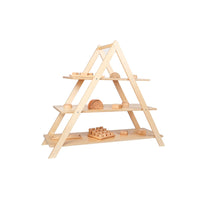
| Face-out book display | Lets children see covers and choose for themselves | Low enough for the youngest child to reach the top row, stable, with a lip so books do not slide |
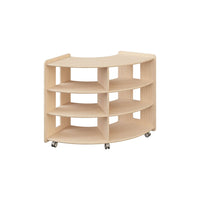
| Low shelves or book baskets | Extra books, themed collections, story props | Open, low and easy to tidy; baskets light enough for children to carry |
| Soft seating | Comfort for children and an adult reading together | Low, stable, with washable covers; room for a small group |
| Rug and cushions | Floor reading, lying down, cosy feel | Non-slip, washable, flat edges that will not trip children |
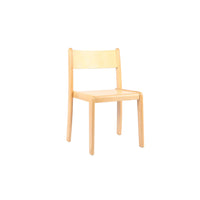
| Small table and chairs (older rooms) | Looking at detailed books, making books | Chair and table from the same size mark |
| Puppet or story prop storage | Retelling stories | Low baskets or hooks, sorted by story |
Soft seating is the heart of most reading corners. Our soft seating range includes low lounges, cushions and shapes in washable covers. If you add a table, match the chairs and table by size mark: C1 (seat 26 cm, table 46 cm) for 3 to 4 year olds and C2 (31 cm, 53 cm) for 4 to 6 year olds. Our size guide has the full chart.

How many books should a reading corner have?
There is no set number. A small, well-chosen selection displayed face-out works better than packed shelves. Most rooms keep a modest display in the corner and a larger reserve stock in storage, rotating books in and out as children's interests change.
Rotation keeps the corner fresh without overwhelming children:
- Keep the favourites. Children love rereading the same story. Leave much-loved books out even when you rotate others.
- Follow interests. If children are fascinated by trucks, bugs or a new baby, bring in books on that topic.
- Link to the room. Match books to what is happening elsewhere: books on building near the block area, books about food when the home corner becomes a café.
- Mix the types. Include stories, non-fiction, rhymes, wordless books and books made by the children.
- Rest, do not discard. Books that go back into storage often feel new again when they return.
What books and materials suit each age group?
Babies need sturdy board and cloth books with simple pictures. Toddlers need short stories, rhymes and books about familiar routines. Three to five year olds enjoy longer stories, information books, books with humour and books that invite them to talk and predict.
| Age | Book types | Other materials | Where to read |
|---|---|---|---|
| 0 to 1 year | Board and cloth books, high-contrast pictures, photo books of faces | Soft toys linked to stories | On the floor, on an educator's lap |
| 1 to 2 years | Board books, lift-the-flap, simple rhymes, books about daily routines | Simple puppets, photo books of the children's families | Floor cushions, low soft seating |
| 2 to 3 years | Short picture books, repetitive stories, rhyming books, simple non-fiction | Story baskets with props, finger puppets | Soft seating, rug |
| 3 to 5 years | Longer picture books, information books, wordless books, alphabet and counting books, books in home languages | Puppets, story props, class-made books, letter and sound materials | Soft seating, rug, small table for detailed books |
Children aged 3 to 5 often move between the reading corner and early letter play. Trace-me letter boards and alphabet puzzles from our letters and numbers range sit well on a nearby shelf.
How do you make a reading corner inclusive?
Choose books where every child can see themselves and their family, and where children meet families, cultures and abilities different from their own. Add books in the languages spoken at home, and make sure every child can physically reach and use the space.
NQS Element 3.2.1 Inclusive environment asks services to organise spaces so every child can participate. In a reading corner that means:
- Diverse families. Books showing different family structures, cultures, skin tones and ways of living.
- Aboriginal and Torres Strait Islander stories. Books by Aboriginal and Torres Strait Islander authors and illustrators, chosen with care.
- Home languages. Bilingual books and books in the languages your families speak. Invite families to read or record a story.
- Disability and difference. Books where children with disability are part of everyday stories.
- Physical access. Room for a child using a walking frame or wheelchair to reach the books, and seating that suits children with different needs.
- Sensory needs. A soft, low-stimulation corner is valuable for children who find the room overwhelming.
What are some reading corner ideas that work?
The best reading corners are simple, comfortable and changed with the children. These ideas suit most early learning rooms and need little more than good furniture and a thoughtful book selection.
- Story baskets. A book in a basket with a few props from the story, such as wooden animals or a puppet, for children to retell it.
- Family photo books. Small books of photos children bring from home, which are read again and again.
- Class-made books. Books the children write and illustrate about their own experiences, excursions or projects.
- A book of the week. One book displayed on its own, read together several times, with related materials nearby.
- A nature reading nook. Non-fiction about plants and animals beside a window, with a magnifying glass and nature items to compare.
- A puppet theatre. A low frame or box next to the reading corner for retelling stories with puppets.
- Home language shelf. A small section with bilingual books and books in families' languages, refreshed with family help.
- Cosy layers. A rug, cushions and a low lounge at different heights so children can sit, lie or curl up.

How do you keep a reading corner in good condition?
Check books and soft furnishings regularly, repair or remove anything damaged, and clean covers and rugs on a set cycle. Regulation 103 requires furniture, materials and equipment to be safe, clean and in good repair, and NQS Element 3.1.2 Upkeep looks at how premises and resources are maintained.
- Repair torn pages straight away, and remove books that are falling apart.
- Wipe board books and plastic covers regularly, especially in babies and toddler rooms.
- Choose soft seating and cushions with removable, washable covers.
- Vacuum or wash rugs on a set schedule and check edges for tripping.
- Tidy the corner with the children at the end of each day, so they learn to care for books.
- Review the selection each term and replace worn copies of favourites.
For a wider view of how assessors look at upkeep and resources, see our NQS Quality Area 3 guide.
Reading Corner Checklist
- On the quiet side of the room, away from blocks, home corner and wet areas.
- Near natural light.
- Defined by low dividers, with clear sightlines for supervision.
- Face-out book display at child height.
- Soft seating for a small group and an adult.
- Non-slip, washable rug and cushions.
- A modest book selection, rotated with children's interests.
- Books reflecting the children's families, cultures, abilities and home languages.
- Puppets and story props stored in low baskets.
- Any cords out of reach and lamps secured.
- A plan for repairing books and cleaning soft furnishings.
Plan Your Reading Corner
A reading corner is one of the easiest areas to get right, and one of the most loved when you do. If you are setting up a new room, send us your floor plan and we will return a quote and 3D design within 24 hours showing where the reading corner sits and how it connects with the rest of the room. Request a quote, or read our EYLF learning environment guide for the room as a whole.
Frequently Asked Questions
How do you set up a reading corner in childcare?
Choose a quiet spot near natural light, away from blocks, the home corner and wet areas. Define it with low shelving so it feels sheltered but stays visible. Add a face-out book display at child height, soft seating for a small group and an educator, a rug and cushions. Keep a small, rotated selection of books that reflect the children.
What furniture do you need for a reading corner?
You need a face-out book display low enough for children to reach, soft seating with washable covers, a non-slip rug and cushions, and low baskets for extra books and puppets. In rooms for older children, a small table and chairs from the same size mark helps with detailed books and making class books.
How many books should be in a reading corner?
There is no fixed number. A small selection displayed face-out is easier for children to choose from than crowded shelves. Keep a larger reserve in storage and rotate books in and out with children's interests, leaving favourites out. Include stories, non-fiction, rhymes, wordless books and books in the children's home languages.
Where should a reading corner go in the room?
Put it on the quiet side of the room, near a window for natural light, away from busy play areas and paths children use to reach doors and bathrooms. Group it with other calm areas. Use low dividers so the corner feels cosy while educators can still see in from across the room.
How often should you rotate books in a reading corner?
Rotate when children's interests change or when a book stops being chosen. Many educators make small changes often rather than swapping everything at once. Keep much-loved books out, bring in titles linked to current interests and projects, and rest other books in storage so they feel new when they come back.
How do you make a reading corner inclusive?
Choose books showing different family structures, cultures, skin tones, abilities and ways of living, including stories by Aboriginal and Torres Strait Islander authors and illustrators. Add bilingual books and books in home languages, and invite families to read. Make sure every child can physically reach the books and that seating suits children with different needs.
What is the best seating for a reading corner?
Low, stable soft seating with removable, washable covers works best, combined with a non-slip rug and a few cushions. Choose seating that fits a small group of children and an educator together, so adults can read with children comfortably. Different heights and shapes let children sit, lie down or curl up.
Planning a room, or a whole centre?
Send us your floor plan. Within 24 hours you'll have an itemised quote, 2D room plans, a 3D showcase and a video walkthrough of your centre.
