




Art area and art trolley: how to set up a creative space in an early learning room
How to choose an art trolley and set up the art area in an early learning room: placement, furniture, materials by age, organising trays and managing mess.
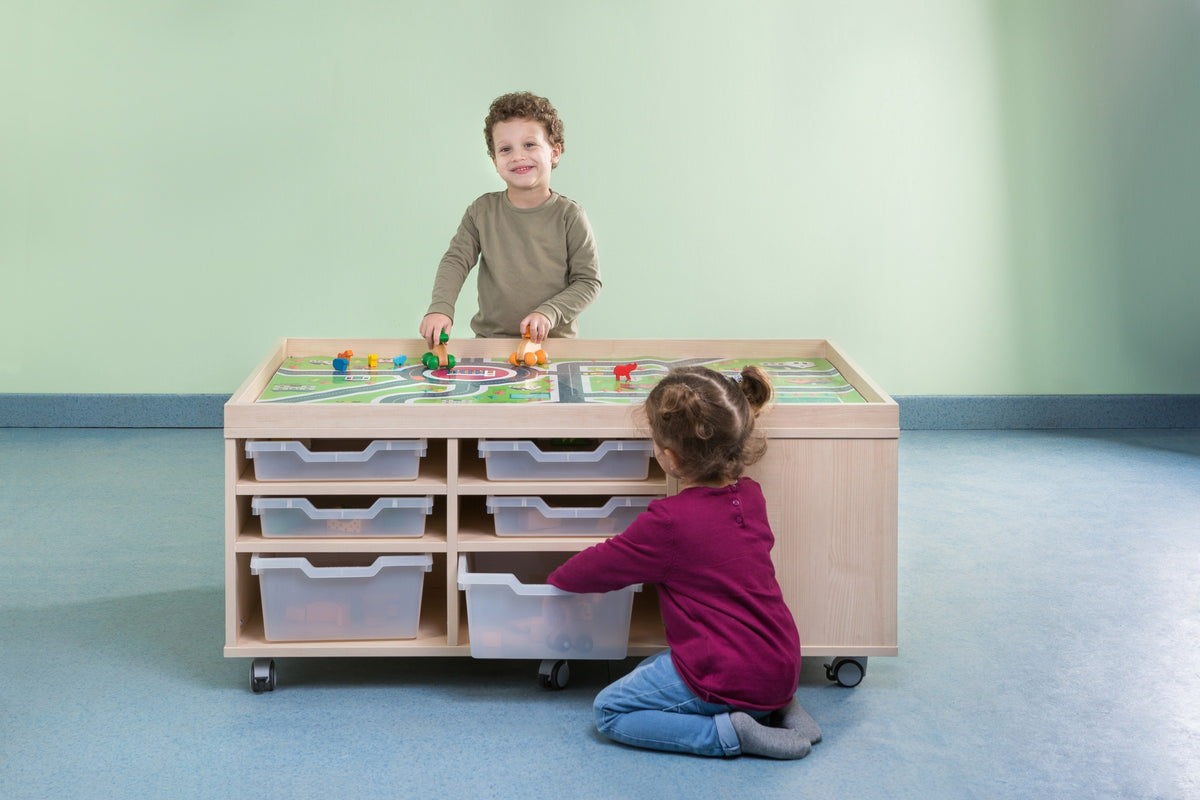
The short answer: An art trolley is a mobile storage unit that keeps art materials organised, visible and within children's reach, and lets educators move art indoors or outdoors. Choose one that is stable at child height, with open or removable trays, wipeable surfaces and lockable castors. Pair it with a table near a sink, an easel, a drying rack and an easy-clean floor.
Key Points
- An art trolley gives children independent access to materials and moves art wherever play happens.
- Check stability, child-height access, removable trays, wipeable finishes and lockable castors.
- Place the art area near a sink and natural light, on a hard floor, away from books and soft seating.
- Store everyday materials low for children and anything needing supervision up high or out of reach.
- Plan for mess from the start: aprons, a drying rack, child-height cleaning tools and a tidy-up routine.
- Open-ended art supports EYLF outcomes and NQS 3.2.2, and recycled materials support 3.2.3.
What is an art trolley and why use one?
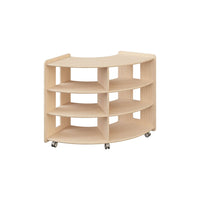
An art trolley is a storage unit on castors, usually with open shelves, trays or tubs, that holds paints, brushes, paper, collage materials and tools. It brings art materials to the children, rather than keeping them in a cupboard only educators can reach.
Centres use art trolleys because they:
- Build independence. Children can see what is available, choose materials and put them back.
- Move with the play. Wheel the trolley outside on a fine day, to the block area for signs, or beside the easel.
- Keep materials organised. Each material has its own tray, so children and educators can find things and notice when stock is low.
- Save space. In smaller rooms, a trolley can double as storage and as a room divider when parked.
- Make tidying easier. Clear trays and labels help children return materials to the right place.
How do you choose an art trolley?
Choose an art trolley that is stable, the right height for the children who use it, easy to clean and easy to move, with storage you can see into. It should be built for daily use and repeated cleaning, because paint and glue get everywhere.
| Feature | What to look for | Why it matters |
|---|---|---|
| Height | Children can see into and reach the trays they are meant to use without stretching or climbing | Independent access is the point of an art trolley |
| Stability | A wide, solid base that does not tip when a child pulls a tray or leans on it | Safety, and regulation 103 requires equipment to be safe and in good repair |
| Castors | Smooth-rolling castors with locks on at least some wheels | Easy to move, but stays put while children use it |
| Trays or tubs | Removable, clear or open trays that slide easily and can be washed | Children can see contents and carry a tray to the table |
| Finish | Sealed, wipeable surfaces that tolerate water, paint and regular cleaning | Keeps the trolley looking good and hygienic for years |
| Size | Fits through your doorways and into the space you have planned | A trolley that cannot get outside loses half its value |
| Layout | A mix of tray sizes, plus a top surface or shelf for brushes and pots | Holds both bulky paper and small collage materials |
Our storage units include art trolleys made for daily use in busy rooms. Edu Fun furniture carries a 5-year warranty, which matters for a piece that works as hard as an art trolley.
Where should the art area go in the room?
Place the art area close to a sink, on a hard, washable floor, near natural light and away from the reading corner and soft seating. If you can, put it near the door to the outdoor area so art can move outside easily.
- Close to water. Children and educators need to wash hands, brushes and pots without walking across the room.
- Hard floor. Vinyl or another washable surface. If the room is carpeted, use a large washable mat under the art table and easel.
- Good light. Natural light helps children see colours clearly. Regulation 110 covers ventilation and natural light, and ventilation matters with paints and glues.
- Away from books and soft furnishings. Keep paint and water well clear of fabric seating and the book display.
- At the edge of the room. Art work needs space to spread out without children walking through it.
- Visible. Regulation 115 requires premises to be designed to facilitate supervision. Keep the art area in clear view, especially when scissors or other tools are out.

What furniture does an art area need?
A well-equipped art area needs an art trolley, a table and chairs at the right height, an easel, a drying rack, somewhere to keep work in progress, and a display space at child eye level. Hooks for aprons and child-height cleaning tools complete it.
- Art trolley. For everyday materials children can access themselves.
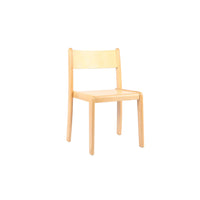
- Table and chairs. Sized to the children, chair and table from the same size mark. Some children prefer to stand for painting and clay, so leave space around the table.
- Easel. A double-sided easel lets two children paint side by side and saves floor space.
- Drying rack. Wet paintings need somewhere to go that is not the floor or the table.
- Work-in-progress storage. A shelf or labelled trays for clay, sculpture and projects children return to over several days.
- Display space. A board or wall at child eye level, so children can see and talk about their work.
- Apron hooks. Low hooks children can reach.
- Educator storage. A high or lockable cupboard for bulk stock and anything that needs supervision.
| Size mark | Age | Seat height | Table height |
|---|---|---|---|
| C02 | 1 to 2 years | 17 cm | 36 cm |
| C0 | 2 to 3 years | 21 cm | 40 cm |
| C1 | 3 to 4 years | 26 cm | 46 cm |
| C2 | 4 to 6 years | 31 cm | 53 cm |
A good fit means feet flat on the floor, knees at about 90 degrees and forearms resting on the table just below elbow height. That posture matters for drawing and cutting, where control comes from a stable body. See our size guide for the full chart.
What art materials suit each age group?
Toddlers need large, simple, safe materials they can explore with their whole body. Three to five year olds can handle a wider range of media and tools, with more detail and more choice.
| Age | What children are exploring | Materials to offer |
|---|---|---|
| 1 to 2 years | Making marks, cause and effect, texture | Chunky crayons, thick paint with large brushes, play dough, large paper taped down, finger painting with supervision |
| 2 to 3 years | Controlling marks, mixing colours, squeezing and rolling | Add chalk, thick markers, sponges and stamps, simple collage with large pieces, glue sticks, clay |
| 3 to 4 years | Representing ideas, cutting, joining | Add child-safe scissors, watercolours, a wider collage range, tape, recycled boxes for construction |
| 4 to 5 years | Planning, detail, longer projects | Add fine brushes, oil pastels, pencils, fabric and thread with supervision, clay tools, materials for multi-day projects |
How do you organise an art trolley?
Organise an art trolley so each material has its own tray, the trays children use are low and labelled, and anything that needs an adult is stored higher or elsewhere. Keep it simple: a trolley children can read at a glance is a trolley they can use and tidy.
- One material per tray. Crayons in one, glue sticks in another, collage in a third. Do not mix.
- Label with pictures and words. A photo or drawing of the contents on each tray helps younger children and supports early literacy.
- Use clear or open containers. Children choose what they can see.
- Low for children, high for adults. Everyday materials on lower trays. Stock, sharp tools and specialist materials higher up or in a separate cupboard.
- Offer a limited choice. A few well-stocked options invite deeper work than everything at once.
- Rotate materials. Swap in new media to follow children's interests and keep the area inviting.
- Restock daily. A quick check at the end of each day keeps the trolley ready for the morning.
- Include recycled materials. Clean boxes, lids, tubes, fabric scraps and natural items are good materials for open-ended collage and construction. This supports NQS Element 3.2.3 Environmentally responsible.
How do you manage mess in the art area?
Plan for mess rather than trying to prevent it. A washable floor, aprons, a drying rack, child-height cleaning tools and a tidy-up routine that includes the children keep art enjoyable for everyone.
- Protect the floor. Hard flooring, or a large washable mat under the table and easel.
- Aprons on low hooks. Children put them on and take them off themselves.
- Cleaning tools at child height. Sponges, small cloths, a dustpan and a small bucket so children can clean up their own spills.
- Lidded paint pots. Non-spill pots and lids reduce waste and keep paint fresh.
- A clear place for wet work. The drying rack sits next to the easel and table, so wet paintings go straight there.
- Name labels ready. Pens or stickers by the drying rack so work is named before it dries.
- Tidy-up as part of the activity. Children wash brushes, wipe tables and return trays. It builds responsibility and care for shared resources.
- A regular deep clean. Wash trays, wipe down the trolley and check for damage on a set cycle. NQS Element 3.1.2 Upkeep looks at how well resources are maintained.

How does an art area support the EYLF and NQS?
A well-resourced art area supports several EYLF V2.0 learning outcomes and NQS Quality Area 3. Open-ended art lets children express ideas, test theories and represent their world in their own way.
- Confident and involved learners. Children experiment, solve problems and persist with ideas over time.
- Effective communicators. Drawing, painting and sculpture are ways of expressing ideas and feelings, and early mark-making leads to writing.
- Strong sense of identity. Children make choices and see their own work valued on display.
- NQS 3.2.2 Resources support play-based learning. Accessible materials on an art trolley let children lead their own creative work.
- NQS 3.2.3 Environmentally responsible. Recycled and natural materials, careful use of paper and paint, and caring for tools.
ACECQA (acecqa.gov.au) publishes the National Quality Standard. Our Reggio Emilia classroom guide has more on atelier-style art spaces if you want to take the art area further.
Art Area Checklist
- Near a sink and natural light, on a hard or protected floor.
- Away from the reading corner and soft seating.
- Clear sightlines for supervision.
- A stable art trolley with lockable castors and removable trays.
- Materials children use stored low, labelled with pictures and words.
- Adult-only stock and tools stored high or in a separate cupboard.
- Table and chairs from the same size mark, matched to the children.
- An easel and a drying rack.
- Storage for work in progress and a display at child eye level.
- Aprons on low hooks and child-height cleaning tools.
- Non-toxic materials and no small parts with children under 3.
- A daily restock and a regular deep clean.
Plan Your Art Area
If you are planning a new room or rethinking your art space, send us a floor plan. We will return a quote and a 3D design within 24 hours, showing where the art trolley, table, easel and drying rack work best. Request a quote or browse our furniture range. Centres with a centre account get 15% off everything once they have spent $1,000, which helps when you add pieces over time. See the centre account page for details.
Frequently Asked Questions
What is an art trolley used for?
An art trolley stores art materials such as paper, paint, brushes, crayons and collage items in trays or shelves on castors. It keeps materials organised and within children's reach so they can choose and tidy independently, and it can be wheeled to wherever art is happening, including outdoors or beside an easel.
What should I look for in an art trolley for childcare?
Look for a stable base that will not tip, a height that lets children see into and reach their trays, removable clear or open trays, sealed wipeable surfaces, and smooth castors with locks. Check that it fits through your doorways if you plan to take it outside, and that it is built for daily cleaning.
How do you organise an art trolley?
Put one material in each tray, label trays with a picture and a word, and use clear or open containers so children can see what is inside. Store everyday materials low for children and keep stock, sharp tools and specialist materials higher up or in a separate cupboard. Restock daily and rotate materials with children's interests.
Where should the art area go in a classroom?
Place the art area near a sink and natural light, on a hard or protected floor, at the edge of the room and away from the reading corner and soft seating. If possible, put it near the door to the outdoor area so art can move outside. Keep it in clear view so educators can supervise easily.
What art materials are suitable for toddlers?
Toddlers do well with chunky crayons, thick paint with large brushes, play dough, chalk, large sheets of paper taped down and simple collage with large pieces. Check every material is labelled non-toxic and suitable for children, and keep small items such as beads, buttons and pompoms away from children under 3, as they are choking hazards.
How do you manage mess in a childcare art area?
Plan for it. Use a hard floor or a washable mat, aprons on low hooks, lidded paint pots, a drying rack beside the easel and child-height cleaning tools such as sponges and a small dustpan. Make tidying part of the activity, with children washing brushes and wiping tables, and deep clean trays and the trolley regularly.
Can an art trolley be used outdoors?
Yes, if it fits through your doors and paths. Wheel it out on fine days, lock the castors once it is in place, and bring it back inside afterwards so materials stay dry and the trolley is not left out in the weather. Outdoor art gives children more space for large-scale painting and messy work.
Planning a room, or a whole centre?
Send us your floor plan. Within 24 hours you'll have an itemised quote, 2D room plans, a 3D showcase and a video walkthrough of your centre.
