



Teaching Arabic to kids at home: a guide for bilingual families
Arabic for kids at home: when to start, bilingual routines that work, letters and numbers through play, Arabic toys, and what to do when they answer in English.
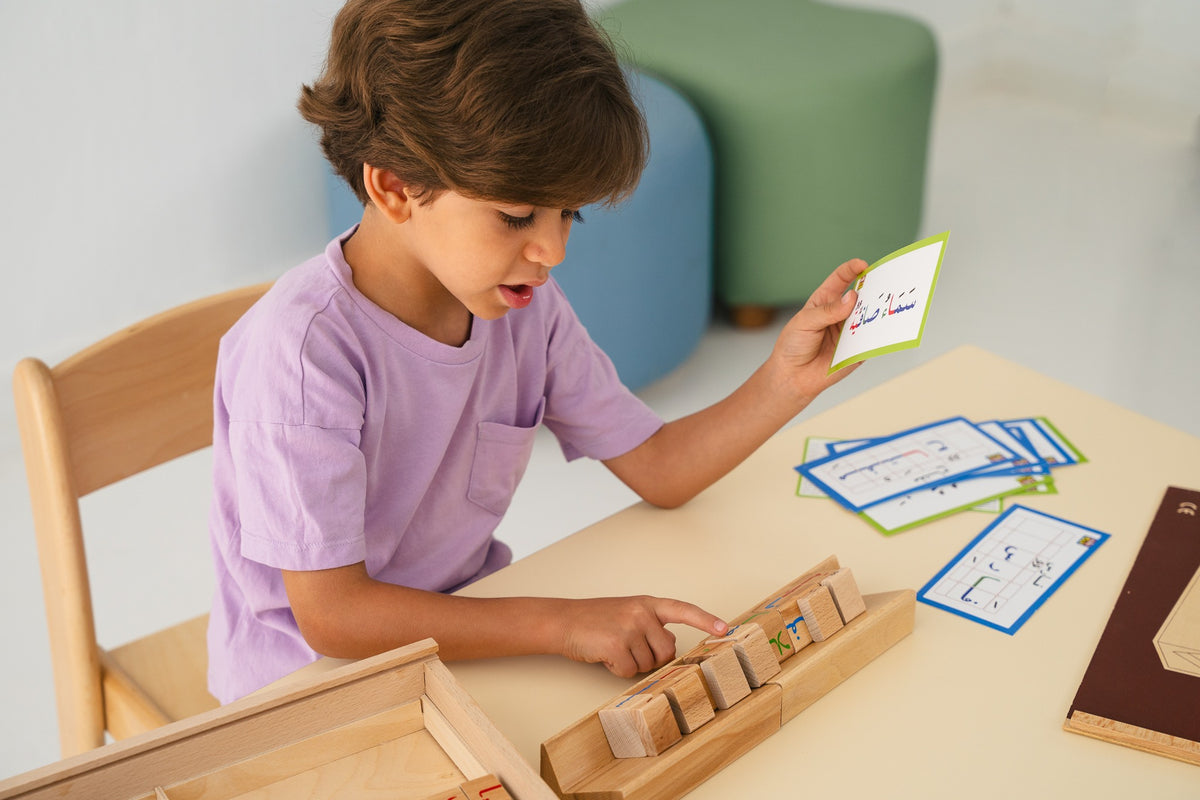
The short answer: Speak Arabic with your child from birth: it will not confuse them or hold back their English. Bring in the letters through play from about age 3, with puzzles, songs, tracing in sand and finding the first letter of their name. Pick one clear family routine, such as Arabic at home, read Arabic picture books every day, and expect some mixing of languages, which is normal.
Key Points
- Spoken Arabic can start at birth; letters usually make sense from about 3, reading later.
- Learning two languages does not cause language delay, and mixing them is a normal stage.
- Consistency matters more than method: choose a routine your family can keep up.
- Teach the letters by sound and shape families, not just in alphabet order.
- Daily routines, songs and stories build more Arabic than formal lessons.
- If your child answers in English, keep answering in Arabic, warmly and without pressure.
When should children start learning Arabic?
Start speaking Arabic from birth. Formal letter learning works best from about age 3, when children can sit for a short activity and their hands are ready for puzzles and tracing. Reading usually follows from around 5 or 6.
Think of it in three layers:
- Hearing and speaking (from birth). Babies and toddlers learn language by hearing lots of it, in warm, everyday moments. Talk, sing, name things and read aloud in Arabic from the start.
- Sounds and shapes (from about 3). Children begin noticing letters, especially the first letter of their own name. Letter puzzles, songs and tracing in sand fit this stage.
- Reading and writing (from about 5 or 6). Joining letters, reading words with vowel marks and writing their name come later, often alongside school.
It is never too late to start, either. A child who begins at 4 or 7 can still learn Arabic well, especially with regular, enjoyable exposure at home.
Will learning Arabic confuse my child or slow down their English?
No. Learning two languages does not cause language delay. Bilingual children may mix words from both languages in one sentence, or have a smaller vocabulary in each language for a while, and both are normal parts of growing up with two languages.
A few things worth knowing:
- Mixing is a skill, not a problem. A child who says "I want more ماء" is using every word they have. It usually settles as both vocabularies grow.
- Count both languages together. A bilingual toddler might know 30 words in Arabic and 30 in English. Together, that is 60 words.
- English will come. In Australia, English surrounds children through childcare, kinder, school, friends and media. Arabic, the language with less support outside the home, is the one that needs your effort.
- Get help if you are worried. If your child isn't babbling, understanding or talking as expected in either language, speak with your child and family health nurse, GP or a speech pathologist, and mention that your child is bilingual.
Raising Children Network has clear, Australian guidance for bilingual and multilingual families.
Which approach should a bilingual family use?
Choose the approach that fits who speaks Arabic at home and how much. What matters most is consistency: children need regular, meaningful Arabic, every day if possible.
| Approach | How it works | Suits | Watch for |
|---|---|---|---|
| One parent, one language | The Arabic-speaking parent always speaks Arabic; the other parent speaks English | Families where one parent speaks Arabic | The child may hear more English overall; add Arabic books, songs and family calls |
| Arabic at home | Everyone speaks Arabic at home; English is for outside | Families where both parents speak Arabic | Gives Arabic the strongest start; English grows quickly from kinder and school |
| Time and place | Arabic at set times or places, such as meals, weekends or at grandparents' | Parents who are less fluent or still learning themselves | Needs real commitment to the set times to work |
| Flexible mix | Both languages used freely as needed | Families where switching feels most natural | English, which surrounds children in Australia, can slowly take over |
Should we teach Modern Standard Arabic or our dialect?
Speak whatever Arabic is natural to your family, usually your dialect, and let books, songs and letter play introduce Modern Standard Arabic (fusha). Children can grow up with both.
Arabic has a written standard used in books, news and formal speech, and many spoken dialects, such as Egyptian, Levantine, Gulf, Iraqi and Maghrebi Arabic, used in everyday life. The Quran is in Classical Arabic, which is closely related to Modern Standard Arabic.
- For talking: use your own dialect. It is the language of love, jokes and family, and it is what your child will use with relatives.
- For letters and reading: use Modern Standard Arabic. Picture books, letter puzzles and alphabet songs are mostly in fusha.
- Don't worry about the gap. Children notice that "book Arabic" sounds a little different from "home Arabic" and, with exposure to both, learn to move between them.
How do you teach Arabic letters through play?
Teach Arabic letters through short, hands-on games: puzzles, songs, tracing letters in sand, and finding the first letter of familiar words. Start with letter sounds and the letters in your child's name, then group letters by shape families.
A few things make Arabic letters different from English, and worth knowing before you start:
- Arabic is usually counted as having 28 letters, written and read from right to left.
- Most letters join to the next and change shape depending on whether they stand alone or come at the start, middle or end of a word. Six letters, ا د ذ ر ز و, never join to the letter after them.
- Many letters share a basic shape and differ only by dots.
- Short vowels are shown as small marks above or below letters (fatha, kasra and damma). Children's books usually include them.
Shape families make the letters much easier to learn:
| Shape family | Letters | What changes |
|---|---|---|
| The "boat" shape | ب ت ث | One dot below, two above, three above |
| The "hook" shape | ج ح خ | Dot inside, no dot, dot above |
| Small corner shape | د ذ | No dot, dot above |
| Small tail shape | ر ز | No dot, dot above |
| Teeth shape | س ش | No dots, three dots above |
| Loop shape | ص ض | No dot, dot above |
| Tall loop shape | ط ظ | No dot, dot above |
| Open mouth shape | ع غ | No dot, dot above |
| Round head shape | ف ق | One dot above, two dots above |
Letter games that work well from about 3:
- Name first. Start with the first letter of your child's name and of "mama" and "baba".
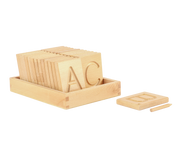
- Letter puzzles. Wooden Arabic letter puzzles let children feel each shape and match it to its place.
- Sand or salt tray. Trace letters with a finger in a tray of sand, right to left, saying the sound.
- Dot detective. Lay out ب ت ث and count the dots together.
- Letter hunt. Find a letter on food packets, signs at the shops or in a picture book.
- Alphabet song. Sing the Arabic alphabet in the car or the bath.
- Body letters. Make ا by standing tall, or ب by lying curved on the floor with a toy as the dot.

What should my child learn at each age?
Focus on talking and listening before 3, letter sounds and shapes from 3, and joining letters and simple reading from about 5. Every child moves at their own pace, especially in a second home language.
| Age | Focus | Activities |
|---|---|---|
| Birth to 3 | Hearing, understanding, first words | Talk through routines, sing songs and rhymes, name body parts and food, read picture books aloud |
| 3 to 4 | Letter sounds and shapes, counting to 10 | Letter and number puzzles, the first letter of their name, tracing in sand, alphabet song, counting stairs and snacks in Arabic |
| 4 to 5 | Recognising most letters on their own, hearing first sounds in words | Shape families and dots, letter hunts, matching letters to pictures, tracing letters with a finger then a crayon |
| 5 to 6 | Joining letters, short vowels, first words | Reading simple words with vowel marks, writing their name, simple Arabic picture books together |
| 6 and up | Reading and writing for meaning | Short stories, letters to grandparents, weekend Arabic school or classes |
Children's letter learning in Arabic draws on the same skills as in English: fine motor control, posture and attention. Our guides to pre-writing skills and letter tracing and fine motor activities by age apply to both languages.
How do you teach Arabic numbers to kids?
Count in Arabic every day, out loud, using real objects, and introduce the written numerals with puzzles and games from about 3. In much of the Middle East, Arabic uses its own set of digits, while North Africa commonly uses the same 0 to 9 digits as English.
| Number | Arabic numeral | Word | Say it |
|---|---|---|---|
| 1 | ١ | واحد | wahid |
| 2 | ٢ | اثنان | ithnan |
| 3 | ٣ | ثلاثة | thalatha |
| 4 | ٤ | أربعة | arba'a |
| 5 | ٥ | خمسة | khamsa |
| 6 | ٦ | ستة | sitta |
| 7 | ٧ | سبعة | sab'a |
| 8 | ٨ | ثمانية | thamaniya |
| 9 | ٩ | تسعة | tis'a |
| 10 | ١٠ | عشرة | 'ashara |
The words above are Modern Standard Arabic; your dialect may say some of them a little differently, and that is fine. One detail surprises parents: although Arabic text runs right to left, numbers with more than one digit are written with the largest place on the left, just as in English, so ten is ١٠.
How can daily routines build Arabic at home?
Use Arabic for the things you do every day: waking up, meals, bath time, getting dressed, car trips and bedtime. Routines repeat, and repetition is how young children learn language.
- Morning. The same greeting every day, صباح الخير (sabah al-khayr, good morning), and naming clothes as you dress.
- Meals. Name foods, colours and amounts: more, finished, hot, cold.
- Bath. Body parts, splash, wet, dry, and Arabic songs.
- Out and about. Count steps, name animals and colours, spot letters on shop signs.
- Bedtime. One Arabic story every night, even if it is short. Retell favourites in your own words.
- Family calls. Video calls with grandparents and cousins give children a real reason to use Arabic.
- Screens, carefully. Arabic cartoons and songs can help, especially when you watch and talk about them together, but they don't replace conversation.
What if my child answers in English?
Keep answering in Arabic, warmly and without making it a battle. Most bilingual children go through phases of preferring English, especially once they start childcare or kinder.
- Recast, don't correct. If they say "I want water", reply with "تريد ماء؟" (you want water?) as you hand it over. They hear the Arabic without feeling told off.
- Create a real need. Time with Arabic-only relatives, Arabic playgroups and trips give Arabic a purpose.
- Find community. Many Australian cities have weekend Arabic community language schools and family groups. Ask your local library about Arabic picture books too.
- Make it fun, not homework. Games, cooking, songs and stories keep Arabic connected to good feelings.
- Praise effort. Notice and enjoy every Arabic word, rather than pointing out English ones.
Bringing Arabic Into Play
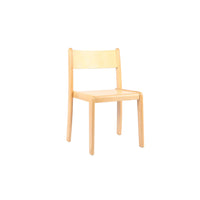
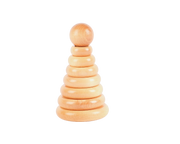
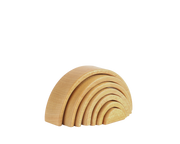
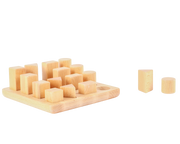
Toys can make Arabic part of everyday play rather than a lesson. Our Arabic toys include wooden Arabic letter and number puzzles, and Chapters has an Arabic line from age 3, alongside a solid-wood table and chair at your child's height to keep. A short daily routine, a few good toys and a lot of talking will take your child a long way.
Frequently Asked Questions
What age should a child start learning Arabic?
Children can start hearing and speaking Arabic from birth, and the earlier they hear it every day, the more natural it becomes. Formal letter learning usually works best from about age 3, through puzzles, songs and tracing in sand. Reading with vowel marks typically starts around 5 or 6. It is never too late to begin.
Does learning Arabic and English at the same time cause speech delay?
No. Learning two languages does not cause language delay. Bilingual children may mix languages or know some words in only one language for a while, which is normal. Count words across both languages together. If your child isn't talking as expected in either language, speak with your child health nurse, GP or a speech pathologist, and mention they are bilingual.
How many letters are in the Arabic alphabet?
The Arabic alphabet is usually counted as 28 letters, written and read from right to left. Most letters join to the next letter and change shape depending on their position in a word. Many letters share a basic shape and differ only by dots, so teaching them in shape families, such as ب ت ث, helps children learn faster.
How can I teach my child Arabic if I am not fluent?
Use a time-and-place approach, such as Arabic at meals or bedtime, and learn alongside your child. Read Arabic picture books with vowel marks, play Arabic songs, and use letter and number puzzles together. Connect your child with fluent speakers through grandparents, community language schools and playgroups. Your enthusiasm matters more than perfect grammar.
Should I teach my child fusha or dialect?
Both, in different ways. Speak your family's dialect for everyday conversation, because it is the language of home and relatives. Use Modern Standard Arabic (fusha) for letters, books and songs, since most children's books and alphabet materials use it. Children who hear both learn that book Arabic and home Arabic sound a little different.
What are good Arabic toys for kids?
Good Arabic toys for young children include wooden Arabic letter puzzles, number puzzles, letter cards for games, Arabic picture books and songs. From about 3, choose toys that let children handle each letter shape and match it to its place. Combine them with everyday talk in Arabic, since toys work best as part of a routine.
Why does my bilingual child answer me in English?
Many bilingual children prefer English for a while, especially after starting childcare or kinder, because English surrounds them. Keep answering in Arabic, warmly and without pressure, and repeat their words back in Arabic. Give Arabic a real purpose through time with relatives, Arabic playgroups and family calls, and keep it fun with stories, games and songs.
A table, a chair, and a new chapter of play.
Chapters: a solid-wood table and chair at their height, with the next size sent as they grow, and a new box of wooden toys for their age every 3 months.
